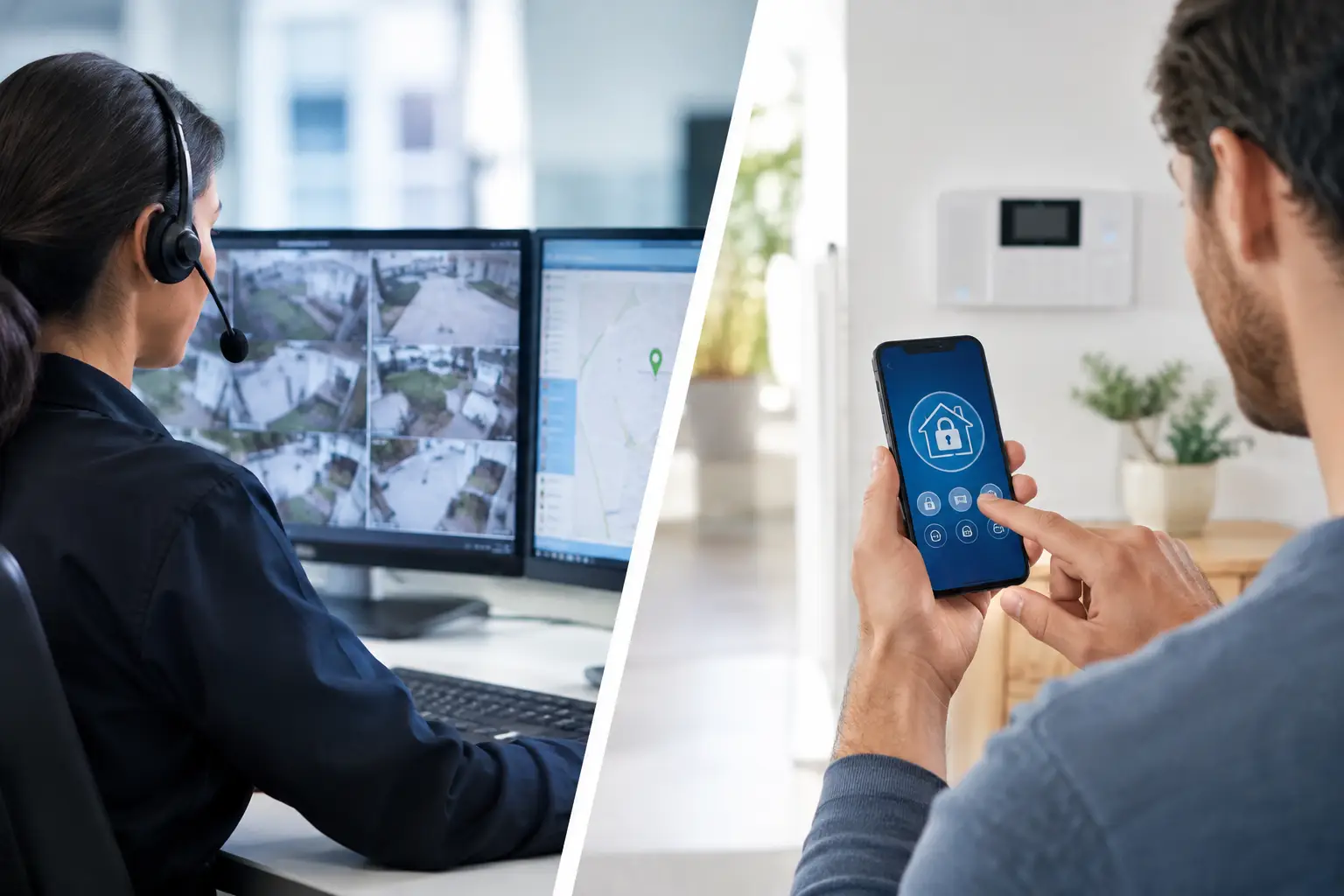
A phone alert is useful. It is not the same thing as having a trained operator respond when you are on a flight, asleep, out on the boat, or simply unable to answer. That is the real decision behind monitored versus self monitored alarms – not whether an app is convenient, but who takes action when an alarm signal comes in.
For homeowners in Naples, Marco Island, Bonita Springs, and Fort Myers, the answer can carry extra weight. Many properties sit empty for months at a time. Others are vacation rentals with changing guests, cleaning crews, and vendors coming and going. The right alarm setup should fit the way you actually use the property, not force you into an expensive package you do not need.
What a Self-Monitored Alarm Actually Does
A self-monitored system sends alarm activity directly to you, usually through a mobile app, text message, phone call, or email. If a door opens unexpectedly, a motion detector triggers, or a smoke detector goes into alarm, you receive the notification and decide what happens next.
That can be a sensible approach for an owner-occupied home where someone is generally nearby and comfortable handling alerts. You may check a camera, call a neighbor, contact a family member, or call 911 yourself if the situation appears serious. Self-monitoring also avoids a monthly central-station monitoring charge.
The limitation is straightforward: the system depends on you being available and able to make a good decision quickly. A notification does not dispatch police, fire, or medical help by itself. If your phone is on silent, has no signal, runs out of battery, or is buried under a stack of notifications, the alarm event may sit unnoticed.
For a primary residence, that may be an acceptable trade-off. For a seasonal home or rental property, it can be a larger gamble. An alarm at 2:00 a.m. is not much help if the only person who can respond is 1,500 miles away.
How Professionally Monitored Alarms Work
With professional monitoring, your alarm system communicates with a central monitoring station when it detects a qualifying alarm event. Monitoring professionals follow established response procedures, attempt to reach the people on your contact list, and request emergency dispatch when appropriate.
The exact process depends on the type of signal and the instructions attached to the account. A burglary alarm, panic signal, fire alarm, carbon monoxide event, or water-related device can each call for a different response. The point is that there is a staffed layer between the alarm and the emergency response process.
Professional monitoring does not mean police arrive instantly or that every alarm is automatically a real emergency. It means the responsibility to react does not rest entirely on a homeowner who may be unavailable. That distinction matters when you are traveling, entertaining, working, or sleeping.
A monitored alarm can also provide documentation that many insurance carriers want when considering a home-security discount. Eligibility and discount amounts vary by insurer, but a monitoring certificate can be valuable for owners of higher-value homes and second properties.
Monitored Versus Self Monitored Alarms: The Real Differences
The monthly cost is the difference most people notice first, but it should not be the only one. Self-monitoring costs less on an ongoing basis because you are serving as the response center. Professionally monitored service adds a recurring fee because a central station is available to handle alarm signals around the clock.
Response responsibility is the bigger distinction. With self-monitoring, you receive information and decide what to do. With professional monitoring, a trained operator follows the account’s response plan when you cannot.
There is also a difference in how each option handles uncertainty. A camera alert may show a delivery driver, a guest who entered the wrong code, or a branch moving in front of a lens. You can sort through those alerts at your own pace. But if a glass-break sensor triggers while a property is vacant, a professionally monitored system gives you a defined escalation path instead of requiring you to assess the situation from another state.
Neither approach eliminates false alarms. Good equipment placement, dependable communications, correct user codes, regular battery replacement, and clear instructions for guests all reduce avoidable dispatches. Monitoring works best when the system is installed and maintained properly, not when it is treated as a set-it-and-forget-it gadget.
When Self-Monitoring Makes Sense
Self-monitoring can be a practical choice when you live at the home full time, keep your phone close, and are willing to respond to alerts. It may also work well as a companion to cameras, smart locks, and garage-door control. For example, a homeowner can receive an alert, check the camera feed, and remotely confirm whether a family member, pet sitter, or delivery person is responsible.
It is often a reasonable fit for lower-risk notifications that do not necessarily require emergency dispatch. A gate left open, a garage door opened during the day, or a smart-lock code being used can all be useful information for the owner to review directly.
Just be honest about the burden. If you routinely silence notifications, travel internationally, work in places where you cannot access a phone, or do not want to make emergency judgment calls, self-monitoring may create a false sense of coverage.
When Professional Monitoring Is Worth It
Professional monitoring is usually the stronger choice for vacant homes, second homes, vacation rentals, and households that want help available beyond their own phone. It is especially relevant when a break-in, fire, carbon monoxide issue, or panic event needs a response even if the owner cannot be reached right away.
For Southwest Florida seasonal residents, the value is often peace of mind during the off-season. A monitored system can watch for more than intrusion. Adding monitored smoke, carbon monoxide, flood, temperature, or power-related devices may help identify a problem before it becomes a much larger property loss. The right devices depend on the home and the risks you want to address.
Vacation-rental owners also benefit from separating access management from emergency response. Smart locks and cameras help manage check-ins, cleaners, and maintenance visits. A monitored alarm adds a backstop for events that are not routine vendor access.
Do Not Let a Provider Force an Unnecessary Replacement
A common frustration is being told that an existing alarm panel must be replaced before it can be monitored. Sometimes replacement is necessary. Older cellular communicators may no longer work, unsupported equipment can become unreliable, and a system with damaged wiring or repeated trouble conditions may not be worth repairing.
But functional equipment should be evaluated before it is discarded. Many systems from brands such as Honeywell, DSC, 2GIG, and Qolsys can be repaired, upgraded, or converted to a new monitoring provider, depending on the panel, communicator, and account setup. A capable local technician should explain what can be reused, what needs attention, and why.
That conversation should be based on the condition of your system, not a sales quota. Sometimes a takeover and communicator upgrade is the smart answer. Other times, a modern panel with better app control, cellular reporting, and automation is worth the investment. You deserve a clear recommendation either way.
Questions to Ask Before Choosing
Before selecting either option, ask who will receive alerts, who is authorized to make decisions, and what happens if no one answers. Confirm whether the system uses cellular communication, Wi-Fi, or both, and ask what backup power is available during an outage.
If you are considering professional monitoring, ask how alarm verification and contact calls are handled, whether there are activation or service fees, and how to obtain a monitoring certificate for insurance. For a rental or second home, also decide who should receive alerts besides you – perhaps a local property manager, trusted neighbor, or family member.
The equipment matters, but the support behind it matters too. When a sensor goes offline or an app stops communicating, you want a technician who knows the system and can schedule service without routing you through a national call center maze.
Choose the Coverage You Will Actually Use
The best alarm arrangement is not automatically the cheapest monthly option or the most elaborate package. It is the one that gives you a realistic response plan when something goes wrong.
If you are present, attentive, and comfortable responding, self-monitoring may be enough. If your home is vacant for long stretches, serves as a rental, or needs protection while you are unavailable, professional monitoring is usually the more dependable choice. A technician-led evaluation can show whether your existing system can be adapted, repaired, or upgraded without wasting money on equipment you do not need.
Before the next trip north, rental turnover, or extended weekend away, take a few minutes to test your alarm plan: Who gets the signal, who can act on it, and what happens if you cannot answer? That answer is worth more than another notification on your phone.
Leave a Reply