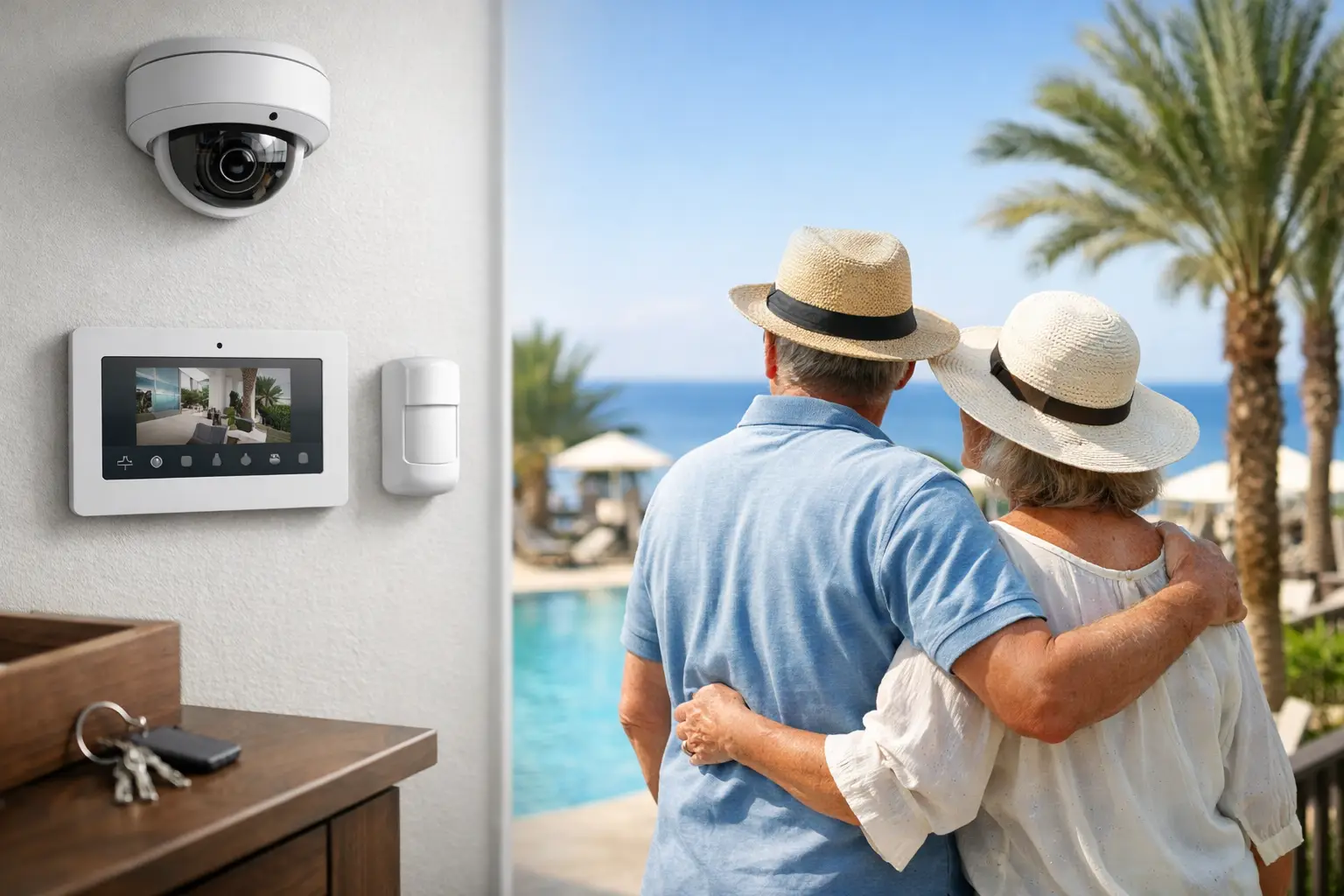
A Naples home can look perfectly fine from the street while a small problem grows inside: a garage left open, a water leak under a sink, an air-conditioning failure, or a door used by a vendor that was never properly secured afterward. For seasonal residents, security systems for snowbirds need to do more than sound an alarm. They need to give you clear answers from hundreds or thousands of miles away.
That means dependable alarm monitoring, useful camera coverage, remote access that your household can actually use, and a local company that can respond when an app notification tells you something needs attention. The right setup is not necessarily the one with the most devices. It is the one that protects the property, fits the way you travel, and remains serviceable for years.
What Snowbirds Need From a Home Security System
A primary residence is lived in, checked daily, and noticed when something changes. A seasonal home is different. It may sit empty for months, receive deliveries, have recurring cleaning or pool service, and depend on neighbors or property managers for occasional visual checks. Your security system should account for those realities.
The foundation is a professionally monitored alarm system with door and window contacts, motion detection where appropriate, and life-safety devices such as smoke, carbon monoxide, and water sensors. Central-station monitoring matters because a break-in or emergency does not wait for you to see a push notification. If an alarm is verified and dispatched through a monitoring center, there is a defined response path even when you are on a flight, asleep in another time zone, or simply away from your phone.
Remote control is equally valuable. A good mobile app lets you arm or disarm the system, review events, receive alerts, and confirm the status of doors, sensors, thermostats, and compatible garage doors. The goal is not to stare at your phone all day. It is to check the home quickly, act when needed, and move on with confidence.
Start With the Risks That Actually Affect Your Property
Security planning is more useful when it starts with the house rather than a standard package. A condo in downtown Naples has different concerns from a Marco Island waterfront home, a gated community residence, or a vacation rental with frequent guest turnover.
For many snowbirds, intrusion protection is only one part of the picture. Water is often the more immediate concern. A leak sensor near water heaters, washing machines, sinks, and air handlers can catch a problem before it becomes a major insurance claim. Temperature and thermostat alerts can help identify HVAC trouble, which matters in Southwest Florida humidity even when nobody is staying in the home.
Camera placement should also be deliberate. Covering the front entry, driveway, garage, pool access, and rear entry often provides more useful information than placing cameras randomly around the exterior. You want to see who arrived, where they went, whether a garage door is open, and whether a service visit was completed. Cameras aimed only at distant streets or landscaping may produce plenty of motion alerts but little usable evidence.
Indoor cameras can be helpful in limited situations, particularly for vacant homes or vacation rentals, but they require more thought. Privacy, guest expectations, and camera placement all matter. Exterior coverage and entry-point cameras are often the better starting point for a second home.
Security Systems for Snowbirds Should Manage Access, Too
Seasonal homeowners regularly need to let people in while they are away. Housekeepers, pool technicians, landscapers, repair professionals, family members, and property managers may all need access at different times. Leaving a physical key under a planter is not a security plan.
A smart lock or controlled garage-door access can allow you to provide entry without handing out permanent keys. Depending on the equipment, you can create temporary codes, change codes after a vendor relationship ends, and review access activity. This is especially useful for rental owners, but it is just as practical for a homeowner who wants a plumber to enter during a short service window.
There is a trade-off. Smart locks and connected garage controls depend on proper installation, reliable WiFi, and a plan for battery maintenance. They should supplement, not replace, good physical door hardware and sensible key control. For homes with several vendors, it may also make sense to have a local contact who can meet a contractor instead of granting broad access remotely.
Cameras Need Reliable WiFi and a Sensible Recording Plan
A camera is only helpful if it stays connected and records the event you need to review. Many homes in Southwest Florida have WiFi dead zones near garages, lanais, guest suites, and exterior doors. Before adding multiple wireless cameras, make sure the network can support them. A properly located WiFi access point can solve coverage problems that a new camera alone cannot.
Recording options deserve an honest conversation. Cloud recording makes remote review convenient, but it may involve recurring fees and depends on internet service. Local recording can provide longer retention and greater control, but the recorder must be protected, maintained, and accessible when footage is needed. Some properties benefit from a combination of both.
Brands and features matter less than whether the system fits the home and the owner’s expectations. Ring may suit a homeowner looking for familiar app-based video at key entry points. Dahua, Hikvision, and Digital Watchdog solutions can make sense for properties that need more extensive coverage, hardwired cameras, longer recording retention, or a professionally designed system. The best choice depends on the property, your internet connection, and how much detail you need when reviewing an event.
Do Not Replace Working Equipment Just Because You Changed Providers
Many snowbirds inherit an alarm system when they buy a home, or they are unhappy with the national provider that originally installed it. That does not automatically mean the entire system belongs in the trash.
Compatible equipment from manufacturers such as 2GIG, Honeywell, DSC, and Qolsys can often be repaired, upgraded, or converted to new monitoring. Existing hardwired door and window contacts are particularly worth evaluating. They are hidden, durable, and expensive to recreate from scratch. Reusing functional equipment can reduce project cost while still giving you modern remote control and dependable monitoring.
There are limits. Older cellular communicators may no longer work on current networks. A panel with repeated trouble conditions, unsupported parts, or unreliable backup power may be more expensive to keep alive than to replace. A technician-led evaluation should explain the options clearly: what can stay, what needs attention now, and what can wait. You should not be pressured into a full replacement because a salesperson earns more when every component is new.
Build a System That Still Works During an Outage
Florida weather makes backup planning practical, not optional. Your alarm panel should have battery backup and cellular communication so it can report alarms if home internet goes down. Cameras and WiFi equipment have different needs. A battery backup unit can keep key network equipment operating briefly during a power interruption, but it will not provide indefinite video service.
Think about what must remain available first. For most seasonal homes, that includes the alarm panel, cellular communication, essential WiFi equipment, and perhaps one or two key cameras. A larger backup-power strategy may be appropriate for a high-value home or a property that experiences frequent outages, but it should be sized realistically. Promising full-home connectivity through a long outage without generator support is not honest planning.
It is also wise to test the system before you leave. Confirm that every household member can use the app, that notifications are going to the right people, that camera views are clear, and that your emergency contact list is current. Change access codes that are no longer needed. These are small tasks, but they prevent a surprising number of problems.
Local Service Matters When You Are Out of State
An app can tell you there is an issue. It cannot climb a ladder, replace a failing device, troubleshoot a camera, or meet you at the property after a storm. That is where a local security company has a real advantage over a distant call center.
For homes across Collier, Lee, and Charlotte Counties, ask who will actually handle service after installation. Will the person who designed the system understand it later? Can the company repair an aging panel, improve WiFi coverage, add a camera, or take over compatible monitoring without forcing a new contract package? Clear answers are more valuable than a low introductory price that rises after the first year.
Vigilant Security approaches seasonal-home protection with technician-led recommendations, practical equipment choices, and local follow-through. A free estimate should begin with how you use the home, who needs access, and what equipment is already in place – not a scripted sales pitch.
Before heading north or leaving for an extended trip, give your home one last remote check from the driveway. If the system is easy to use there, with help close by if anything goes wrong, it will be far more useful when you are states away.
Leave a Reply