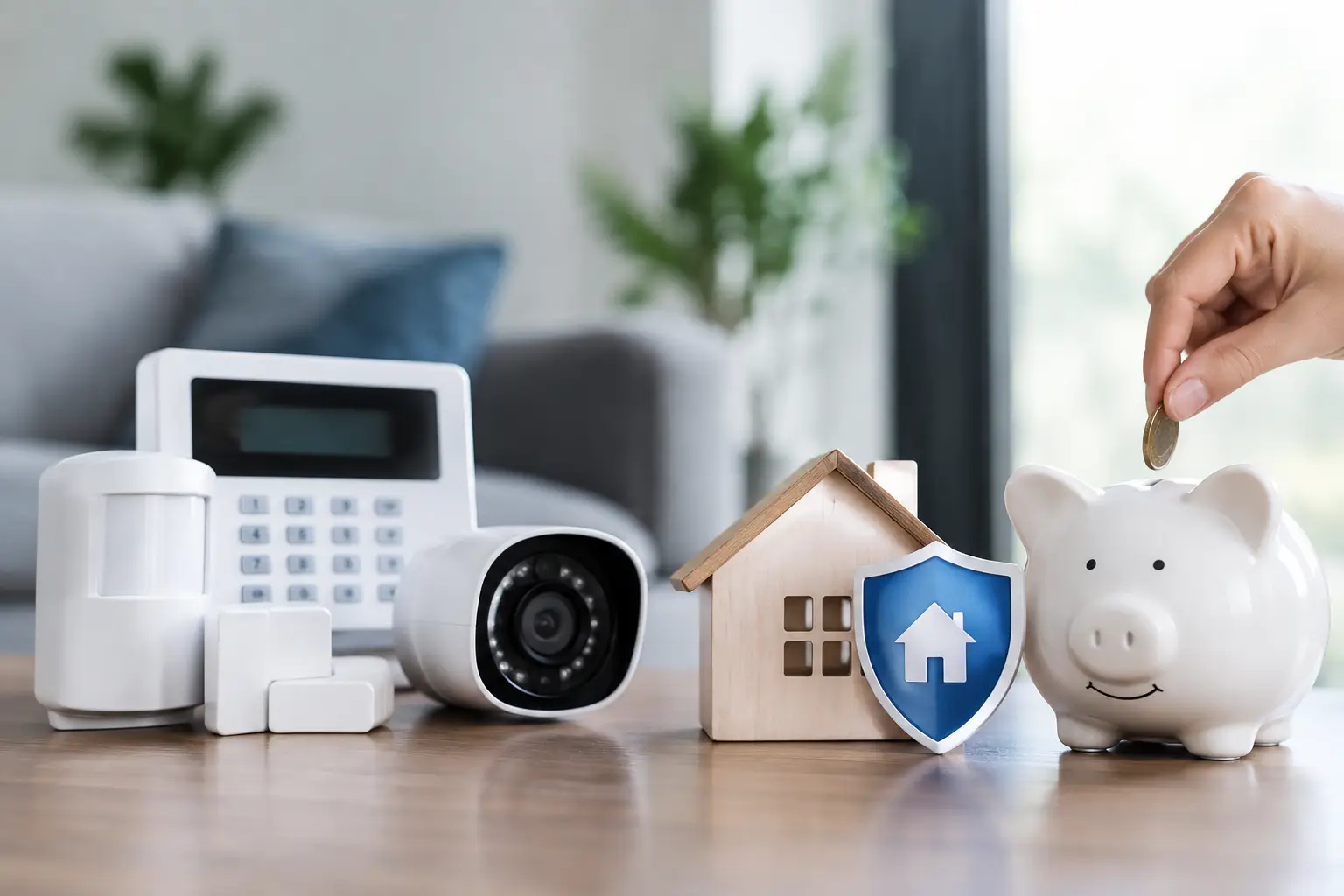
A burglar alarm can do more than alert you to a break-in while you are away from Naples, Marco Island, or your seasonal home in Southwest Florida. Depending on your carrier and policy, alarm system insurance discounts may reduce part of your homeowners insurance premium. The catch is that insurers usually care less about the keypad on the wall than they do about what the system actually does, how it is monitored, and whether you can document it.
For many homeowners, the discount is a welcome benefit, but it should not be the only reason to install security. A properly designed system helps protect the property, provides earlier notice of trouble, and gives you a practical way to manage a home from another state. The insurance savings are best viewed as one piece of the value.
What insurers usually mean by an alarm discount
Insurance companies set their own underwriting rules, discount amounts, and documentation standards. There is no single Florida-wide discount schedule. One carrier may offer a small credit for a locally sounding burglary alarm, while another gives meaningful consideration only to a professionally monitored system that can report both intrusion and fire events.
In general, the more independently verifiable protection a system provides, the more likely it is to qualify. A monitored alarm communicates to a central station when an event occurs. The monitoring center follows the agreed response procedures, which can include contacting you, dispatching authorities when appropriate, or notifying emergency contacts. That is very different from a siren that only makes noise at the house or a camera app that sends a push notification to a phone that may be on silent.
Some insurers also distinguish between burglary monitoring, fire monitoring, water detection, low-temperature alerts, and emergency medical devices. For a vacation home or seasonal residence, environmental alerts can be just as valuable as intrusion protection. A water leak that runs unnoticed for days can create far more damage than a forced door.
Alarm system insurance discounts: what may qualify
Most carriers ask for a few basic details before applying a credit. They may want to know whether the system is professionally installed, whether it is monitored 24/7, what events it monitors, and whether the communication path is reliable. They may also ask for a current monitoring certificate.
A typical qualifying setup may include a control panel, door and window contacts, motion detection where appropriate, a siren, cellular or internet communication, and active central-station monitoring. Smoke and heat detection may be listed separately. The exact equipment matters less than having a system that is working, configured correctly, and connected to the services described on the certificate.
Cameras are excellent for verifying activity, checking on vendors, and keeping eyes on entry points, docks, pool areas, or detached structures. But cameras alone do not always qualify for an insurance credit. Many policies specifically require a monitored intrusion alarm, monitored fire alarm, or both. A smart lock, video doorbell, or self-monitored camera system can improve security, but homeowners should not assume those devices automatically meet an insurer’s requirements.
Hardwired systems can absolutely qualify when they are in good working order. In fact, many established Southwest Florida homes have quality existing wiring and sensors that should be tested and reused rather than thrown out. A local technician can often repair, upgrade, or take over monitoring for compatible systems from brands such as Honeywell, DSC, 2GIG, and Qolsys without forcing a complete replacement.
Ask your insurance agent before choosing equipment
The quickest way to avoid disappointment is to call your insurance agent or carrier before signing an alarm contract. Ask exactly what type of protection earns a discount under your current policy. A short conversation can clarify whether the carrier requires central-station monitoring, monitored smoke detection, a specific certificate format, or additional documentation after installation.
Use plain questions:
- Does my policy offer a credit for monitored burglary protection, monitored fire protection, or both?
- Is professional central-station monitoring required?
- Will a self-monitored camera or app-based system qualify?
- Do you need a monitoring certificate, installation invoice, or annual renewal notice?
- Does the discount apply to a primary residence, seasonal home, or vacation rental?
The answer may depend on the age and construction of the home, the insurer, and the policy type. A high-value coastal property may have different requirements than a year-round residence inland. If your policy is changing at renewal, confirm the requirements again rather than relying on an old credit from a previous carrier.
Why monitoring matters when you are out of town
For second-home owners, the practical value of monitoring is not limited to an insurance form. You may be in Illinois, New York, Canada, or across town when an alarm, smoke detector, or water sensor activates. A central station provides another layer of response when you cannot immediately answer a call or check an app.
That does not mean every home needs the same package. A homeowner who lives in the property full time may prioritize perimeter protection and easy app control. A seasonal resident may want monitored alarm and fire protection, cameras at key access points, smart locks for trusted vendors, and alerts for water or temperature issues. A vacation-rental owner may need managed access and clear video coverage around entrances while respecting guest privacy.
Good security design starts with how the property is used. It is not a contest to install the most devices. Too much equipment in the wrong places creates nuisance alerts, higher costs, and a system that people stop using. The goal is dependable coverage that makes sense for the home and its risks.
The monitoring certificate is often the key document
Once monitoring is active, ask for an insurance certificate. This document generally identifies the monitored location and confirms the type of service in place. Your carrier may accept it by email, through an agent portal, or with other policy documents.
Review the certificate before sending it in. Make sure the property address is correct and the service type matches what your insurer requested. If you added monitored fire protection after the original installation, request an updated certificate instead of assuming the old one covers it.
Keep a copy with your policy paperwork. If you change insurance carriers, renew your monitoring, or have a lapse in service, the credit may need to be reviewed. Monitoring that has been canceled, disconnected, or left on an aging communicator can create a gap between what the insurer believes is protecting the home and what is actually in service.
Do not let an old system cost you a valid discount
A wall keypad that looks dated is not proof that an alarm system is useless. Many older systems have solid hardwired contacts, motion detectors, sirens, and smoke devices that can remain valuable. The real questions are whether the panel communicates reliably, the backup battery is healthy, sensors are functioning, and the monitoring account is active.
This is where homeowners can get pushed into unnecessary replacement. National providers often prefer to sell new packages, especially when a system was installed by another company. But compatible equipment can frequently be repaired, modernized, or converted to new monitoring. Reusing functional infrastructure can lower upfront costs while still providing the documentation your insurer needs.
There are times when replacement is the right call. Unsupported panels, failing communicators, unreliable wireless sensors, storm-damaged wiring, or a system that cannot support the needed fire and environmental devices may justify an upgrade. A technician-led evaluation should explain the reason clearly and separate what must be replaced from what can remain.
A discount is helpful, but reliability is the real return
Insurance credits vary enough that no honest security company should promise a particular savings amount. Your carrier makes that decision, and the premium reduction may be modest compared with the cost of monitoring. Still, a professionally monitored alarm can be worthwhile because it supports faster awareness of emergencies, stronger property oversight, and better control of a home that is often vacant.
For Southwest Florida homeowners, reliability deserves special attention. Power outages, storms, seasonal vacancies, aging batteries, and changing internet service can all affect a system. Cellular communication, battery backup, regular testing, and prompt local service are not flashy features, but they are what keep an alarm useful when conditions are less than perfect.
Before relying on alarm system insurance discounts, verify the carrier’s requirements and make sure your system can meet them year after year. A local inspection can tell you whether your existing equipment is worth keeping, what needs attention, and whether active monitoring can be added without paying for a wholesale replacement. The best setup is the one that protects your property when you are away and gives your insurer clear proof that it does.
Leave a Reply