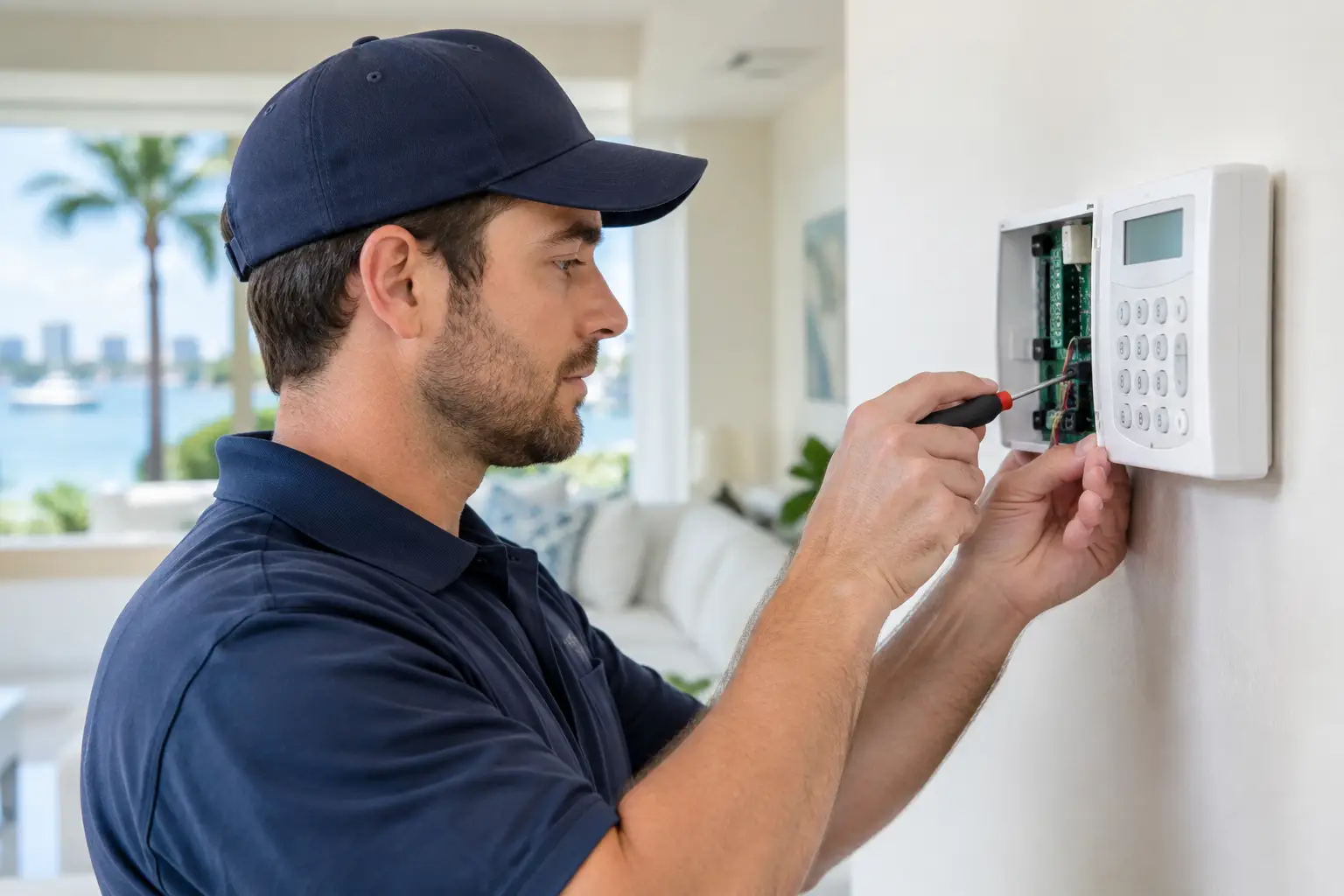
That keypad by the garage may be old, but it does not automatically belong in a dumpster. Homeowners asking who repairs legacy alarm systems are often dealing with a system that was installed by a prior owner, tied to a national provider, or simply ignored until it starts beeping at 2 a.m. The right local security technician can determine whether the issue is a simple repair, a monitoring conversion, or a sensible upgrade – without treating replacement as the only answer.
Who Repairs Legacy Alarm Systems?
A qualified local alarm and low-voltage security company is usually the best place to start. These technicians work with alarm panels, keypads, door and window contacts, motion detectors, sirens, communicators, backup batteries, and the wiring that connects them. They can diagnose both older hardwired systems and early wireless systems that may no longer communicate reliably.
Not every electrician or general handyman is equipped to troubleshoot an alarm panel properly. A security system is more than a collection of wires and sensors. It must recognize an intrusion, report the event to a monitoring center when applicable, and provide clear information to the homeowner. That requires someone who understands the equipment, alarm programming, communications paths, and the practical details of testing a system without creating unnecessary dispatches.
Manufacturer support can also be limited. Honeywell, DSC, 2GIG, and Qolsys equipment may have long service lives, but manufacturers generally do not send a technician to a home to troubleshoot an older installation. The company that originally installed the system may help, but national providers often focus on their current packages, their own monitoring agreements, and a replacement sale. If their equipment is proprietary or locked to their platform, options may be narrower.
A local company that services multiple brands can give you a more useful answer: what is still working, what needs attention, what can be reused, and what genuinely needs to change.
Start With a Real System Assessment
An alarm that seems outdated may only need a fresh backup battery, replacement transformer, repaired keypad, or a new communication device. A technician should inspect the panel, test the zones, identify trouble conditions, confirm the siren works, and check whether the system can report alarms over a current connection.
Communication is often the deciding factor. Many older systems relied on a landline or a cellular communicator that used a retired network. The sensors and panel may still be perfectly functional, but the system can no longer send an alarm signal to central monitoring. In that case, replacing the communicator or adding a compatible upgrade may preserve much of the existing system.
For a Southwest Florida home, testing should go beyond the panel itself. Seasonal humidity, power outages, lightning, construction work, and long periods when a property is vacant can expose weak batteries, corroded connections, damaged exterior devices, and intermittent wireless signals. A quick look at the keypad is not a complete inspection.
The goal is not to preserve every old component at all costs. It is to avoid paying for a full replacement before someone has proven that one is necessary.
What a Technician Can Often Repair
Legacy systems commonly fail in predictable ways. A good service visit can isolate the problem instead of replacing the entire system based on a vague trouble message. Typical repairable issues include:
- Failed backup batteries causing low-battery alerts or repeated keypad beeping
- Damaged door, window, or motion sensors creating false alarms or open-zone alerts
- Aging keypads with faded displays, stuck buttons, or communication errors
- Cut, loose, or corroded wiring to hardwired sensors and sirens
- Obsolete phone or cellular communicators that prevent monitored alarm reporting
- Programming errors after a power loss, phone-provider change, or previous service visit
Hardwired contacts are particularly worth evaluating. If a home already has concealed wiring in doors, windows, and walls, that infrastructure can be valuable. Reusing functional hardwired sensors can reduce disruption, preserve the appearance of the home, and keep an upgrade cost more reasonable.
When Repair Makes Sense and When Replacement Does Not
Repair is a strong option when the panel is stable, the zones test correctly, wiring is in good condition, and the system can be supported with a current communicator. It can be especially practical for homeowners who want dependable monitoring but do not need a large smart-home overhaul.
Replacement becomes more sensible when the panel is unsupported, parts are no longer available, trouble conditions keep returning, or the system cannot provide the remote control and notifications the household needs. Second-home owners and vacation-rental owners often benefit from a modern app-based platform that lets them arm or disarm remotely, check activity, manage users, and receive alerts while they are away.
There is a middle path, too. An older wired alarm system can sometimes retain its existing contacts and siren while receiving a newer panel, keypad, communicator, or wireless expansion. This approach can improve reliability and remote access without abandoning useful infrastructure.
Be cautious of anyone who gives a replacement quote without testing the system. Sometimes replacement is the right call. But a technician should be able to explain why the current equipment cannot be repaired or upgraded, what will be reused, and what the new system will do better.
Can an Older System Be Monitored Again?
Often, yes. A compatible system may be taken over for central-station monitoring after the panel and communicator are tested. This is especially relevant for homeowners who inherited an alarm system or ended service with a previous provider but still have working equipment in the house.
Takeover monitoring is not guaranteed. Some systems installed by large national companies, including certain ADT or Vivint installations, use proprietary equipment or programming that limits outside service. Even then, the existing wiring, sensors, and locations may still help reduce the cost of installing a replacement system.
Before monitoring begins, a local technician should verify the account programming, alarm reporting, emergency contact information, and the signal path to the monitoring center. The system should be placed on test and activated to confirm that alarm events reach the center correctly. A yard sign or keypad display is not proof that a system is actively monitored.
Homeowners should also ask about insurance documentation. Once a monitored system is active, many insurers will accept a certificate that may help support a home insurance discount. Requirements vary by carrier, so it is wise to confirm the specific documentation your insurer needs.
Questions to Ask Before Hiring an Alarm Repair Company
The first question is simple: do you repair and monitor existing systems, or do you only sell new packages? That answer reveals a lot. A service-focused company should be willing to inspect the equipment before recommending a path forward.
Ask whether the technician who provides the estimate will understand the repair work and whether the same local team is available after installation. High-turnover, commission-based sales models can create pressure to replace equipment that still has useful life. You deserve a clear explanation, not a scripted pitch.
It also helps to ask which brands the company services, whether it can reuse hardwired sensors, how it handles old cellular communicators, and what happens if a needed part is unavailable. Get the monitoring cost, service-call expectations, and any equipment or programming fees in writing.
At Vigilant Security, the practical approach is to evaluate the system in front of us, including equipment from brands such as Honeywell, DSC, 2GIG, and Qolsys, then recommend the least disruptive solution that provides dependable protection. Sometimes that is a repair. Sometimes it is a monitoring conversion. Sometimes a modern replacement is the more responsible choice.
A Legacy System Should Not Leave You Guessing
If an old keypad is chirping, a zone will not clear, or you are unsure whether an inherited system still reaches a monitoring center, schedule a professional assessment before the next trip out of town. A local technician can give you a straight answer about the equipment you have and help you protect the property without paying for changes you do not need.
Leave a Reply