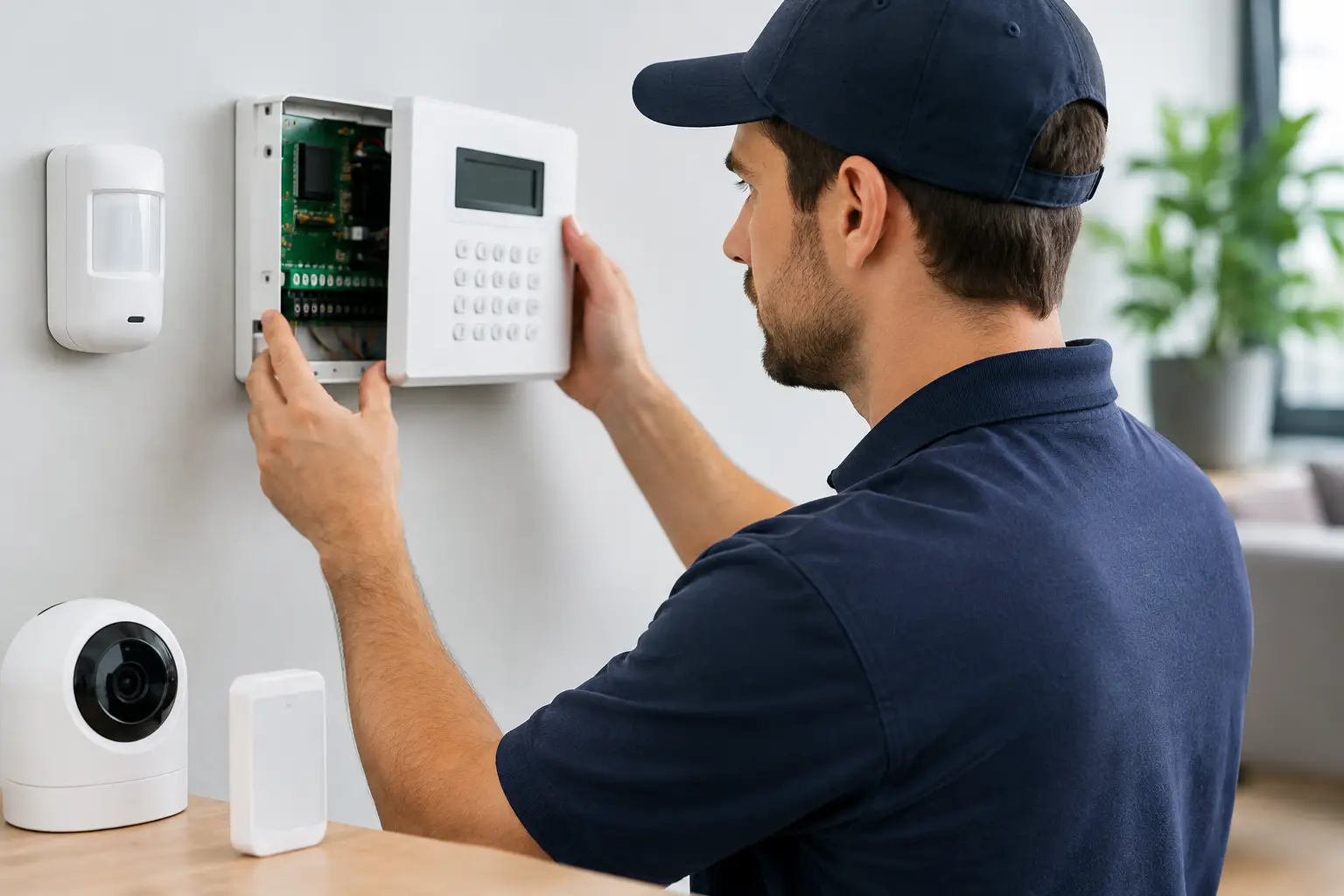
A security system does not become worthless because the original alarm company changed, raised its rates, or stopped returning calls. Alarm panel compatibility determines whether the equipment already protecting your home can be repaired, monitored by another provider, or upgraded without tearing out hardware that still works.
For homeowners in Naples and throughout Southwest Florida, that distinction can save real money. Many homes have hardwired door contacts, motion detectors, glass-break sensors, keypads, and sirens that were installed properly years ago. Replacing an entire system may be necessary in some cases, but it should be a technical decision, not a sales tactic.
What Alarm Panel Compatibility Actually Means
The alarm panel is the control center of the system. It receives signals from sensors, communicates with the monitoring center, activates the siren when needed, and may connect to an app for remote control. Compatibility is not simply a question of whether a keypad lights up. It means determining whether the panel, communicator, sensors, and desired monitoring service can work together reliably.
A compatible system may allow a local security company to take over monitoring while keeping much of the existing equipment in place. An incompatible system may still have reusable wired sensors, even if the panel itself needs replacement. That is why a proper assessment looks at the complete installation rather than offering a one-size-fits-all answer over the phone.
The common panel brands seen in local homes include Honeywell, DSC, 2GIG, and Qolsys. Each has different generations of equipment, programming methods, communications options, and app capabilities. Some are straightforward to service and monitor. Others are locked into proprietary platforms or have reached the end of their supported life.
The Panel Is Only One Part of the Decision
A panel can be functional but still need an update because its communicator relies on an outdated cellular network. Older 3G communicators, for example, no longer provide a dependable path to central-station monitoring. In that situation, the panel may be worth keeping if it accepts a current LTE or dual-path communicator. If it does not, replacing the panel may be the cleaner and more dependable choice.
The good news is that hardwired devices often outlast control panels by many years. Door and window contacts are simple, durable components. Existing wiring inside walls can be especially valuable in a larger home, where replacing every sensor with wireless equipment would add cost and future battery maintenance.
When You Can Keep Your Existing Alarm Equipment
Keeping equipment makes sense when the system is secure, serviceable, and able to meet the way you use the property. A homeowner who wants basic monitored burglary protection may have different needs than a seasonal resident who wants app alerts, smart locks, cameras, garage access, and controlled entry for cleaners or contractors.
Existing equipment is often a good candidate for reuse when the panel is a supported model, the zones are working correctly, and a current communicator can be installed. This is common in homes where the original provider was ADT or another national company. The name on the yard sign does not automatically mean the panel cannot be monitored elsewhere. Many systems use widely supported equipment behind the scenes.
A technician should verify the panel model, inspect the enclosure, test each zone, review backup battery condition, and identify the existing communication path. They should also ask what matters most to you. If the goal is dependable monitoring and lower monthly cost, there may be no reason to replace a solid panel just to sell a new package.
For vacation-rental and second-home owners, reuse can be particularly practical. A tested system with reliable remote notifications and central-station monitoring can protect the property without forcing an unnecessary renovation. The right solution may be an alarm upgrade paired with cameras and access control, rather than a full rip-and-replace project.
When Replacing the Panel Is the Better Call
There are cases where preserving the old panel costs more in time, reliability, and frustration than a modern replacement. A candid recommendation should acknowledge that.
Replacement is usually justified when the panel is proprietary, unsupported, damaged, or unable to communicate through current networks. It may also be the right move if you want features the existing system cannot provide, such as a more capable mobile app, user codes for vendors, automation rules, touchscreen control, or better integration with smart locks and thermostats.
Older panels can also create service problems when parts are hard to source or programming access is restricted. A system that repeatedly shows trouble conditions, loses communication, or has unreliable wireless sensors may not be a good candidate for continued investment. Replacing the control equipment while retaining tested hardwired contacts can offer a sensible middle ground.
There is a trade-off. Modern wireless panels are flexible and can be installed with less disruption, but wireless sensors require batteries and depend on signal quality. Hardwired systems typically involve more labor to modify, yet they can be exceptionally dependable when the original wiring is in good condition. Neither approach is automatically better. The property, existing infrastructure, and owner’s expectations should drive the decision.
Alarm Panel Compatibility and Monitoring Takeovers
Changing monitoring providers is different from changing every device in your home. If your system is compatible, a new provider can often program and test the panel, install an approved communicator if needed, and connect it to a central monitoring station.
A proper takeover is more than activating an account. Every protected opening and device should be tested. The technician should confirm that alarm, fire, panic, and supervisory signals are arriving correctly. If you use an app, that app should be set up with the right users and permissions before the job is complete.
This matters for homeowners who are away for part of the year. A panel that appears normal locally may still fail to send a signal when it matters. Testing communication, backup battery performance, and cellular signal is not optional. It is the difference between having equipment on the wall and having a monitored security system.
Be cautious with providers who promise to take over any system without first identifying the model. Some systems can be converted easily. Others, including certain proprietary installations, cannot be reprogrammed for outside monitoring. A technician-led estimate should give you a clear answer before you commit.
Questions to Ask Before Approving an Upgrade
Before agreeing to a replacement proposal, ask whether the existing panel is supported, whether the current sensors can be reused, and whether the system can communicate over current cellular networks. Ask what features you gain by replacing the panel and which features you would lose, if any.
You should also know who will service the system after installation. National providers often separate sales, installation, and service into different departments. That can leave homeowners repeating the same story to a new person every time there is a problem. Local service has value when the technician who evaluates the equipment understands how it was configured and why certain components were retained.
For properties with cameras, gate access, smart locks, or garage-door controls, ask how those systems will be managed. An alarm panel does not need to control every device to be useful. In some homes, separate apps are more reliable and easier for family members or property managers to use. In others, a more integrated setup is worth the added planning. The practical answer depends on who needs access and how often the home is vacant.
A Better Way to Evaluate an Older System
The fastest path is not always the cheapest path, and the cheapest quote is not always the best value. Start with an on-site evaluation that treats your existing system as an asset until testing proves otherwise. At Vigilant Security, that means looking for working equipment worth preserving, identifying limitations plainly, and recommending replacement only where it improves protection or serviceability.
A good alarm system should make an absent homeowner feel informed, not dependent on a call center. Whether your current panel can be monitored, repaired, or replaced, the right answer begins with someone willing to test what is already there and explain the options in plain English. Keep the equipment that still earns its place, and upgrade only what your home truly needs.
Leave a Reply