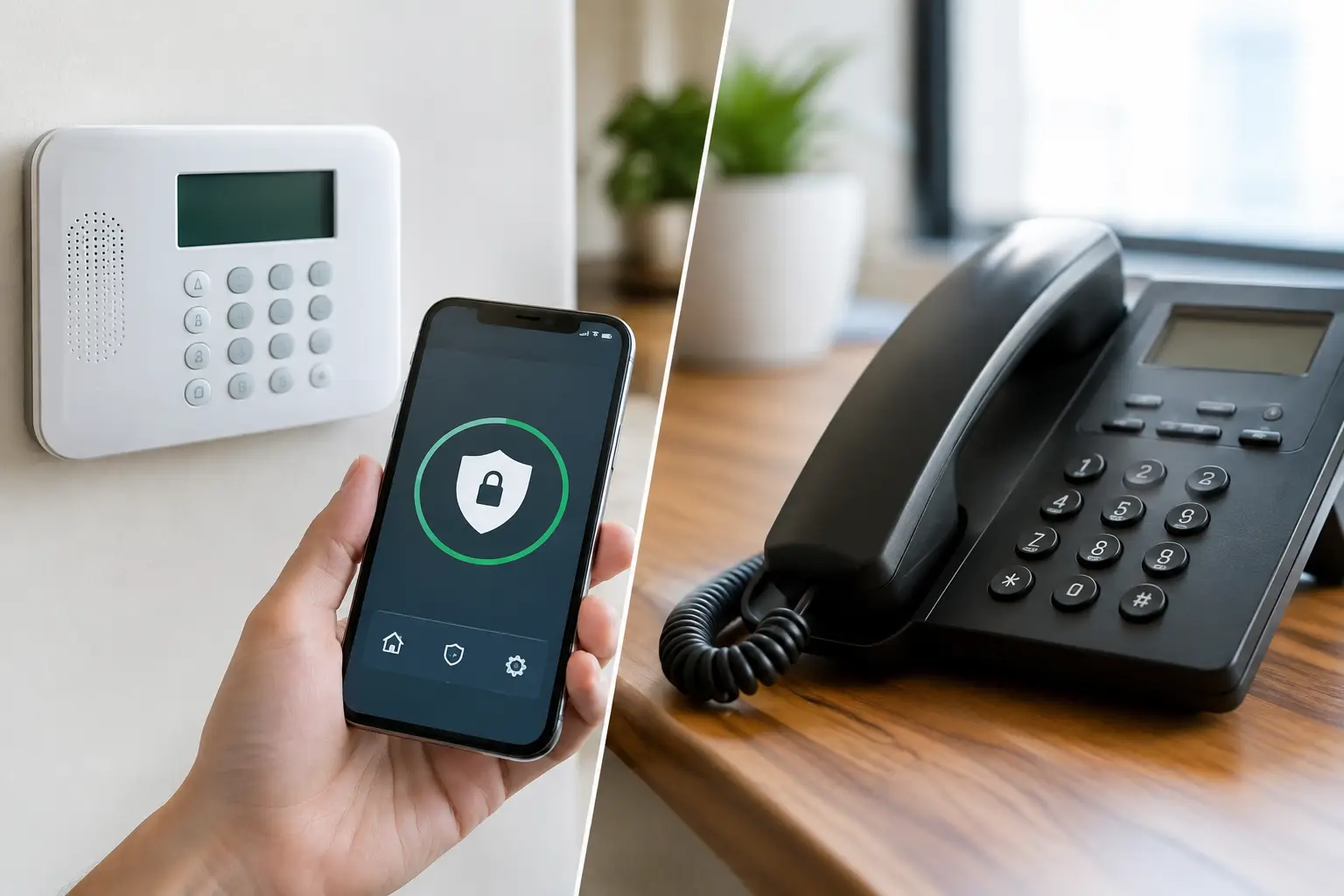
A home alarm can look perfectly normal at the keypad while its communication path is outdated, disconnected, or unable to reach the monitoring center. That is why cellular versus landline alarm monitoring deserves more attention than it gets, especially for homeowners who spend part of the year away from Naples, Marco Island, Bonita Springs, or Fort Myers.
The panel inside the house detects an intrusion, fire, panic alarm, or other event. Monitoring only works if that panel can reliably send the signal out. For many older systems, that path was a traditional phone line. For most current systems, it is a cellular communicator. The right choice depends on the property, the existing equipment, and how much confidence you need when the home is empty.
Cellular Versus Landline Alarm Monitoring: The Real Difference
Landline monitoring sends alarm signals over a phone connection. On a true traditional copper phone line, it has historically been dependable and familiar. Older alarm panels were built around it, and many homes still have the wiring in place.
Cellular monitoring sends the signal through a dedicated alarm communicator using a cellular network. It does not require a home phone number, and it is separate from your internet service. When an alarm occurs, the communicator contacts the central station, which follows the agreed response procedure.
The key distinction is not whether one method is technically capable of reporting an alarm. Both can do that. The practical question is what happens during a power failure, phone outage, internet change, equipment failure, or attempted tampering. Those are the moments when the communication path earns its keep.
Why Traditional Phone-Line Monitoring Is Becoming Less Practical
A traditional landline may still be a reasonable choice in a limited set of circumstances. If a home has a maintained copper phone line, the alarm panel is compatible, and the owner does not need remote app control, it can continue to provide basic monitored protection.
But many homeowners believe they have a landline when they actually have phone service delivered through a cable modem, fiber terminal, or internet router. That is not the same thing. If that equipment loses power or the internet service goes down, the phone connection may go down with it. The alarm panel may still be powered by its backup battery, but it may have no way to call out.
There is also a cost issue. Keeping a phone line solely for an alarm system can mean paying for a service nobody uses. For a second home or vacation property, that expense often makes less sense every year.
Traditional phone service is also less common than it once was. As providers retire older infrastructure and change service types, a panel that once reported reliably can become a source of recurring trouble. A homeowner may discover the problem only after a failed test, a service change, or an alarm event.
Why Cellular Monitoring Fits Most Southwest Florida Homes
For most current alarm installations and upgrades, cellular monitoring is the stronger option. It removes the need for a dedicated home phone line and avoids dependence on the home’s WiFi for alarm reporting. That matters when a router freezes, an internet provider has an outage, or someone accidentally unplugs networking equipment.
Cellular communicators also support the features many absentee owners actually use: arming and disarming from an app, system notifications, user-code management, and activity awareness while away. Depending on the panel and selected services, homeowners can receive alerts when a door opens, a code is used, or the system is disarmed.
For a seasonal home, these alerts are more than a convenience. They help the owner know whether a housekeeper arrived, a contractor entered during an approved window, or a family member accessed the property. Combined with properly placed cameras and smart locks, a monitored alarm becomes part of a workable remote-property plan rather than a box on the wall that only matters during an emergency.
Cellular service is not magic. A communicator needs adequate signal at the property, and its battery backup needs to be tested and replaced when necessary. A qualified technician should check signal strength and confirm that the panel is communicating with the monitoring center before calling the job complete. In areas with unusual construction, metal roofing, dense concrete, or a weak carrier signal, equipment placement and communicator choice matter.
Power Outages, Hurricanes, and Communication Reliability
Southwest Florida homeowners have a practical reason to think beyond normal-day performance. During storms and power outages, the alarm system needs two things: backup power for the panel and a working route to the monitoring center.
Most alarm panels use a battery to keep operating for a limited period after utility power fails. A cellular communicator can continue reporting during that time if the cellular network is available. A traditional copper landline may also continue operating in certain situations because it can carry its own line power. However, a phone service delivered by a modem usually depends on the home’s power backup and the provider’s local network equipment.
Neither option can promise perfect communication under every hurricane condition. Cellular towers can be congested or damaged, and local phone infrastructure can fail as well. The better approach is to build layers of protection: a maintained alarm backup battery, a tested communicator, current contact information at the monitoring center, and cameras or remote-access equipment configured with realistic expectations.
For higher-risk properties, dual-path monitoring may be worth considering. This combines cellular with an additional communication route, often internet-based. If one path fails, the other can report. It is not necessary for every home, but it can be a sensible option for properties that are vacant for long periods, contain valuable contents, or require a higher level of oversight.
What About Your Existing Alarm Panel?
Replacing an old phone line does not always mean replacing the entire security system. Many Honeywell, DSC, 2GIG, and Qolsys systems can be evaluated for a cellular communicator, takeover monitoring, repair, or a targeted upgrade. Existing hardwired door and window contacts may remain useful even when the main panel or communicator changes.
That is where homeowners should be cautious about one-size-fits-all sales pitches. A national provider may recommend a full replacement because it is easier to sell a standardized package. Sometimes replacement is the honest answer, particularly when a panel is unsupported, unreliable, damaged, or unable to support current communication standards. But functional equipment should not be discarded simply because a salesperson prefers a new contract.
A technician-led evaluation should answer a few straightforward questions: Is the panel compatible with a current cellular communicator? Are the sensors working? Is the backup battery healthy? Can the existing system support the monitoring and app features you want? Are there any known communication or code issues? Clear answers let you decide whether a repair, takeover, communicator upgrade, or full replacement is the better value.
Monitoring Is Different From App Notifications
This distinction causes understandable confusion. An app notification tells you that something happened. Professional monitoring means a central station receives the alarm signal and follows a response plan when you may be asleep, traveling, on a plane, or unable to check your phone.
A camera alert can be useful, but it does not replace monitored burglary, fire, or panic protection. Cameras may identify activity after it occurs. A monitored alarm is designed to create an immediate event that can trigger the appropriate call list and, when warranted, emergency dispatch.
For vacation-rental owners, the combination is often the most practical. Cameras can help verify exterior activity and vendor arrivals, smart locks can manage access, and a cellular-monitored alarm can protect the property when it is vacant. Each tool has a different job.
How to Choose Between Cellular and Landline Monitoring
If you maintain a true copper phone line, live at the property full-time, and want only basic alarm reporting, landline monitoring may still be serviceable. It should be tested regularly, and you should verify that the phone service is not actually modem-based.
For most homeowners, cellular monitoring is the better long-term choice. It eliminates the dedicated phone-line requirement, supports modern remote controls, and is generally better suited to homes where internet service, phone service, or occupancy can change. It is particularly practical for seasonal residents who need to manage a home from another state.
The right decision should be based on the system you own and the way you use the property, not on pressure to sign a long contract or replace every working device. A local technician can test the current communication path, inspect the equipment, and explain the options in plain language.
If your panel still relies on a phone line, do not wait for a service change or failed alarm test to find out it cannot report. A simple evaluation can show whether a cellular upgrade will preserve the equipment you already have while giving you a more dependable way to keep watch from wherever you are.
Leave a Reply