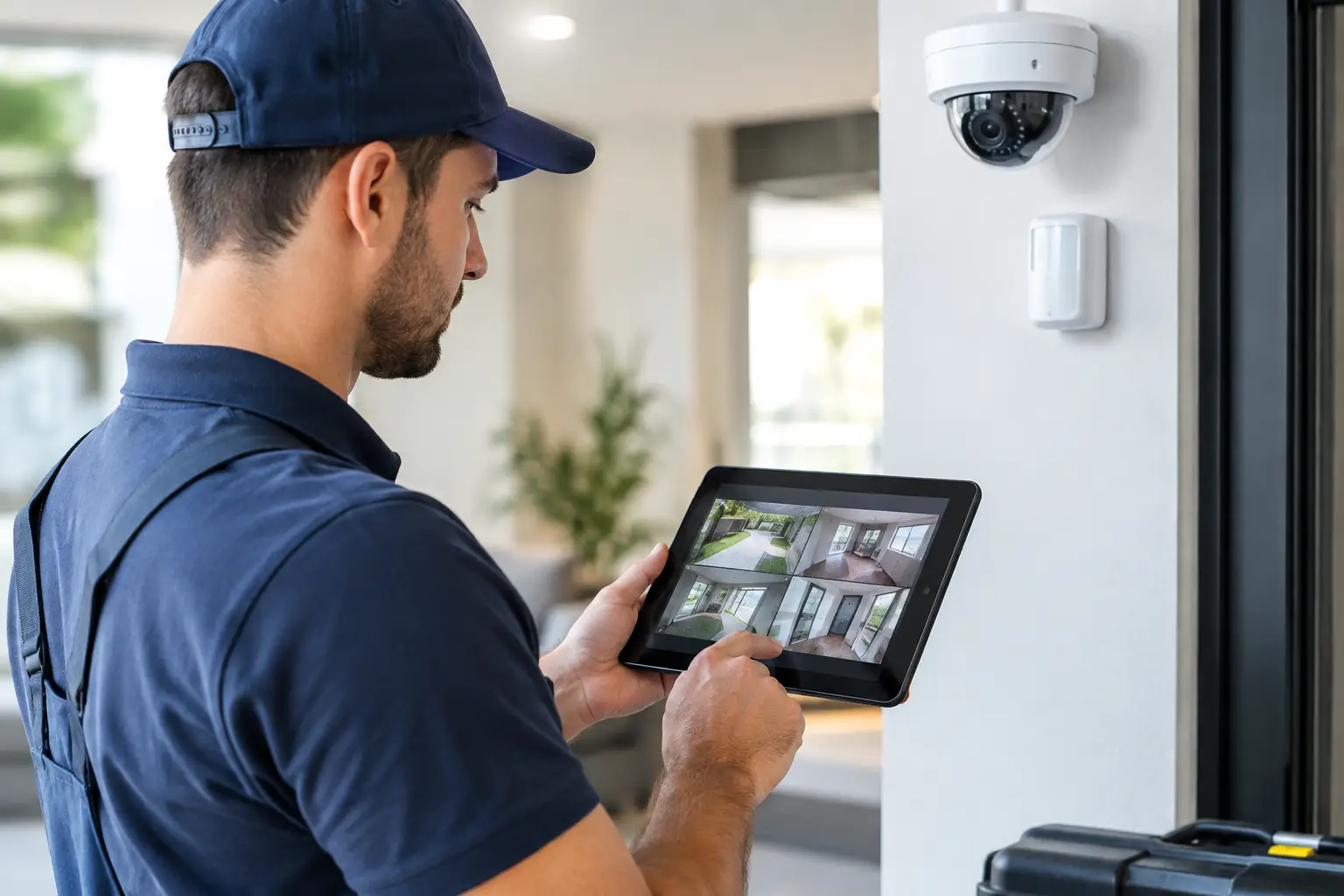
A security estimate should not feel like a sales presentation disguised as a service call. For Southwest Florida homeowners, security system technician estimates should answer practical questions: What is wrong, what still works, what needs to change, what will it cost, and who will be there if the system needs attention later?
That matters even more when your home sits vacant for part of the year, serves as a vacation rental, or holds valuable equipment while you are up north. A system that looks impressive on paper is not much help if it is difficult to use, cannot notify you remotely, or requires replacing equipment that could have been repaired.
What a Good Security System Technician Estimate Includes
A useful estimate starts with an on-site assessment, not a script. The technician should inspect the existing alarm panel, sensors, keypads, cameras, wiring, internet connection, and power supplies before recommending replacement equipment. Many homes in Naples, Marco Island, Bonita Springs, and Fort Myers already have usable hardwired contacts, motion sensors, sirens, or camera cabling. Reusing those components can reduce cost and avoid unnecessary disruption.
The estimate should clearly separate labor, equipment, monitoring, and any optional upgrades. You should know whether a quoted camera price includes mounting, wiring, aiming, app setup, recording configuration, and training. You should also know whether an alarm proposal includes cellular communication, central-station monitoring, permits if applicable, and remote app access.
A technician should be willing to explain the reason behind each recommendation in plain language. For example, a failing alarm communicator may only need an upgrade to restore monitoring, while an unsupported control panel may make a broader replacement the smarter long-term choice. Those are different situations, and they should not receive the same quote.
Why Technician Estimates Beat Commission-Driven Quotes
National alarm companies often separate the sales visit from the installation and service work. That model can create a frustrating gap between what was promised and what the technician finds when arriving at the property. It can also encourage oversized packages, long contracts, and replacement recommendations that do not account for equipment already in place.
A technician-led estimate puts the person assessing the job closer to the actual work. They can see whether existing wiring is accessible, where cameras can realistically be placed, whether WiFi will reach an exterior device, and how a homeowner actually uses the property. A seasonal resident may need reliable alerts and remote lock control. A vacation-rental owner may need camera coverage at entry points and easy ways to manage vendor access. A full-time homeowner may care most about a simple alarm app and faster repair service.
There is no single best system for all three. The right recommendation depends on the home, the existing infrastructure, and how much control you want while away.
What Technicians Should Check Before Pricing a System
Before accepting a security proposal, make sure the technician has considered the details that affect performance and final cost. For a complete assessment, that normally includes:
- The condition and compatibility of the current alarm panel, keypads, sensors, and communicator
- Existing low-voltage wiring and whether hardwired devices can be reused
- Camera views, lighting conditions, mounting locations, and recording needs
- Internet coverage, especially at garages, gates, detached structures, and exterior camera locations
- Remote-access needs for owners, family members, cleaners, landscapers, and property managers
These details are not minor. A camera may need a better mounting location to avoid glare from Florida sun or a closer WiFi access point to maintain a stable connection. An alarm panel may be compatible with a monitoring takeover, but its aging battery, backup power supply, or cellular unit may still require attention.
A proper estimate identifies those issues before installation day. That is how homeowners avoid the familiar surprise of being told later that a quote did not include wiring, equipment relocation, setup, or the additional hardware needed to make the system work correctly.
Repair, Upgrade, or Replace? The Honest Answer Depends
Homeowners often call because an old system is beeping, a keypad shows a communication trouble message, or a previous provider says the equipment is obsolete. Obsolete does not always mean useless. In many cases, the security devices throughout the home are still functional, even if the main panel or communicator needs updating.
Repair makes sense when the issue is isolated and the system remains dependable. A failed backup battery, damaged sensor, bad transformer, disconnected camera cable, or communication problem may be corrected without starting over. This is often the most cost-effective path for homeowners who want to restore protection quickly.
An upgrade can make sense when the foundation is sound but remote control, app notifications, cellular monitoring, or better camera coverage is missing. Compatible systems from brands such as Honeywell, DSC, 2GIG, and Qolsys may allow a practical transition to modern monitoring and control. Likewise, existing camera infrastructure may support an improved system using brands such as Uniview, Hikvision, Speco, or Ring, depending on the property and goals.
Replacement becomes the better choice when equipment is unreliable, unsupported, poorly installed, or incapable of meeting the needs of the home. A second home with no dependable remote visibility is not the place to gamble on a panel that intermittently communicates. Replacing the right components can be wiser than repeatedly repairing a system that has reached the end of its useful life.
Estimates for Homes That Are Empty Part of the Year
For seasonal and second-home owners, the estimate should focus on what happens when no one is there. Alarm monitoring, camera notifications, water-leak detection, smart locks, garage-door access, and thermostat alerts can all be useful, but they should be selected for a reason rather than bundled because they sound impressive.
Consider how you will respond to an alert. If a camera detects motion, can you quickly verify whether it is a delivery, a vendor, wildlife, or a person who should not be there? If a cleaner or repair professional needs access, can you provide it without sharing a permanent code or leaving a key under a mat? If the internet goes down, will the alarm still have a cellular path to communicate with the monitoring center?
The best estimate makes those decisions easier. It should show which features protect the property, which features add convenience, and which options are not necessary for your situation.
Questions Worth Asking Before You Approve the Work
Ask whether the estimate preserves functional equipment where possible. Ask who will perform the installation and who will handle service later. Ask whether monitoring can be taken over from a previous provider if your existing system is compatible. If you are comparing two quotes, ask each company to explain exactly what is included rather than comparing only the bottom-line number.
You should also ask about ownership. Some low introductory offers come with equipment restrictions, lengthy agreements, or costs that become clear only after the installation is complete. A fair estimate makes recurring monitoring costs, service expectations, and optional equipment clear before you commit.
For camera work, ask where recordings are stored, how long they are retained, who can access them, and whether the proposal accounts for internet reliability. For alarm systems, ask how the system communicates during a power outage and whether you will receive the insurance documentation you need after activation.
Local Accountability Is Part of the Estimate
A security system is not a one-time purchase. It is equipment that may need a battery, a repair, a monitoring update, a new user code, or help after a storm or internet change. That is why the company behind the quote matters as much as the equipment listed on it.
Vigilant Security approaches estimates with the expectation that the same local team may be called back to service the system later. That creates a different incentive than selling the most equipment possible on the first visit. The goal is a system that works reliably, is understandable for the homeowner, and can be supported without sending you through a national call center.
Before signing any proposal, ask for a clear explanation of what is staying, what is changing, and why. A technician who can answer those questions directly is giving you more than a price. They are giving you a plan for protecting the property when you are there and when you are miles away.
Leave a Reply