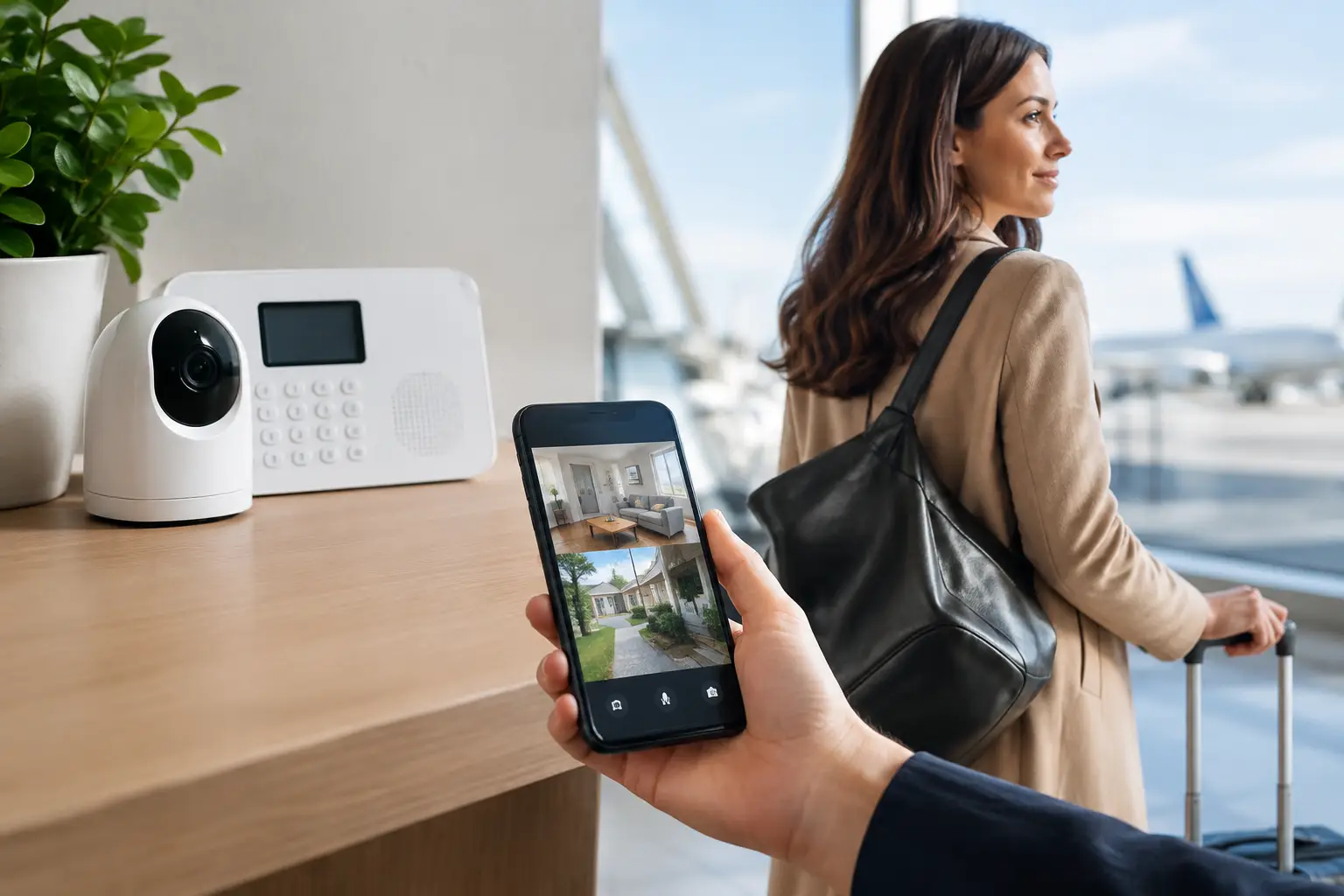
A smoke detector can sound for hours in an empty seasonal home. A door sensor can trip while you are on a flight home. Without alarm monitoring, those alerts may stay inside the house or on a phone notification you do not see until it is too late. Professional monitoring gives your system a live connection to trained operators who can verify the signal, follow your response plan, and request emergency dispatch when needed.
For homeowners in Naples, Marco Island, Bonita Springs, and Fort Myers, that matters for more than break-ins. A monitored system can help protect a full-time residence, a vacation home, or a rental property when storms, service vendors, travel, and long periods away from the house create more opportunity for small problems to become expensive ones.
What Alarm Monitoring Actually Does
An alarm system detects an event. Monitoring makes sure that event reaches someone who can act on it. When a protected door opens, a motion detector activates, a smoke alarm trips, or a panic button is pressed, the system sends a signal through its communicator to a central monitoring station.
There, trained operators receive the alarm and follow the instructions associated with the account. Depending on the event and the monitoring plan, they may call the property, contact the people on your emergency list, and request police, fire, or medical dispatch. The exact sequence matters. A good setup reflects how you actually use the property, not a generic call list created during a rushed sales appointment.
Monitoring is not a substitute for emergency responders, and it cannot guarantee a response time from police or fire departments. It does provide a critical layer between an alarm event and the moment someone is able to take action. For an owner who is out of state, that layer can be the difference between learning about an issue quickly and learning about it after a neighbor notices something is wrong.
The System Needs a Reliable Path Out
Your control panel needs a communicator that can transmit alarm signals. Older systems may use a phone line, while most current systems use cellular communication, internet service, or both. Cellular is often the preferred option because it remains independent of the home’s WiFi and broadband connection.
That does not mean every home needs an entirely new alarm system. Many existing hardwired security panels, keypads, door contacts, motion detectors, and sirens can remain useful. If the equipment is functional and compatible, an experienced technician may be able to upgrade the communicator and take over monitoring without tearing out components that already work.
This is especially relevant for homeowners leaving a national provider such as ADT or Vivint. Some systems can be converted; others are proprietary, outdated, or tied to discontinued cellular technology. The honest answer is always system-specific. A technician should inspect the panel, test the devices, identify the communicator, and explain whether repair, conversion, or replacement makes the most financial sense.
Why Professional Alarm Monitoring Matters for Remote Owners
App alerts are useful, but they have limits. Your phone may be on silent, out of service, or in another time zone. An alert may also fail to tell you whether the issue is a genuine emergency, a user mistake, or a sensor problem. Professional monitoring adds people, documented procedures, and around-the-clock availability.
For a second home or vacation rental, monitoring also creates a clearer plan when you cannot personally meet a deputy, fire crew, or service vendor at the property. You can designate local contacts, property managers, family members, or trusted neighbors. You can also update that list as circumstances change, which is far better than leaving an old emergency contact from years ago on file.
A monitored alarm is particularly valuable when paired with practical property technology. Cameras can help you see who arrived at the driveway or front door. Smart locks can provide a time-limited code to a cleaner or contractor. Garage-door control can confirm whether an access point was left open. None of these tools replaces the alarm, but together they give remote owners better visibility and control.
Alarm Monitoring Is Not the Same as Camera Notifications
Homeowners sometimes assume a camera subscription provides the same protection as a monitored alarm. It does not. Cameras are excellent for awareness, recorded evidence, and remote visual checks. They can notify you of motion, people, vehicles, or activity in specific areas, depending on the system.
But camera motion alerts can be frequent in Southwest Florida. Rain, landscaping crews, wildlife, delivery drivers, headlights, and changing shadows can all trigger notifications. If every alert is treated like an emergency, people eventually begin ignoring them.
A well-designed security plan assigns each tool a clear job. Door and window contacts protect entry points. Motion detection covers interior areas where appropriate. Smoke and life-safety devices identify emergencies that may not be visible on a camera. Cameras help you investigate activity. Central-station monitoring provides the response path when an alarm condition requires immediate attention.
Choosing the Right Alarm Monitoring Setup
The best system depends on the house, how long it sits vacant, who needs access, and what equipment is already installed. A small condo occupied year-round has different needs from a large waterfront home that is empty for six months each year.
Start with the events you want monitored. Burglary protection is the baseline for many homes, but monitored smoke, carbon monoxide where applicable, panic devices, medical alerts, and environmental sensors may be worth considering. Water detection deserves a serious conversation for seasonal properties. A small leak under a sink or near a water heater can cause extensive damage before anyone arrives, especially in a warm, humid home left vacant.
Next, consider how you want to control the system. Modern panels from brands such as 2GIG, Honeywell, DSC, and Qolsys can offer app-based arming, disarming, user-code management, and activity notifications. The convenience is real, but the system should remain simple enough for every member of the household to use correctly. A complicated automation setup is not helpful if no one knows how to arm the house before leaving.
Finally, ask how service will work after installation. Alarm equipment is not a set-it-and-forget-it purchase. Batteries need replacement. Cellular communicators can age out as networks change. Sensors may be damaged during remodeling. A local company that knows your equipment and can schedule an actual technician is often more valuable than a low introductory price followed by a long wait for support.
Questions to Ask Before You Sign Up
Before choosing a monitoring provider, get clear answers about the equipment, service process, and recurring costs. Four questions are especially useful:
- Is the panel and communicator compatible with the monitoring service, or are you being told to replace equipment that still works?
- What is included in the monthly monitoring price, and are there activation, programming, contract, or cancellation fees?
- Who will service the system if a sensor fails, the app stops communicating, or a false alarm needs troubleshooting?
- Can you update emergency contacts, user codes, and monitoring instructions without a drawn-out call-center process?
Price matters, but it should not be the only measure. An unusually cheap monthly plan can become costly if it requires proprietary equipment, locks you into a difficult contract, or leaves you waiting for a technician when the system fails. On the other hand, a homeowner with a simple, reliable existing panel may not need a major upgrade just to receive quality monitoring.
Keep the Monitoring Plan Current
A monitored system is only as useful as its information. Test the system at least annually, and test after a major equipment change, internet or cellular upgrade, renovation, or long vacancy. Before testing, contact the monitoring station so operators know not to dispatch responders for the test signal.
Review contacts and passwords regularly. Remove former employees, old tenants, contractors, or anyone who should no longer have a code or receive alarm calls. For rental homes, consider separate access codes for cleaners, property managers, and guests rather than sharing one permanent code with everyone.
False alarms deserve attention too. They are not just an inconvenience. Repeated false dispatches can lead to local fines and can make people less responsive to real warnings. A technician can often solve the underlying issue, whether it is a loose door contact, a poorly placed motion detector, a low battery, or a user-training problem.
Vigilant Security approaches monitoring as an ongoing service, not a sales transaction. The goal is to preserve working equipment when possible, explain the options plainly, and make sure the people who install or repair the system remain accountable when you need help later.
The right monitored alarm should give you confidence without turning property protection into another full-time job. If your home has an aging system, has changed providers, or simply needs a better response plan while you are away, start with a technician-led assessment. A clear answer about what can be reused, what needs attention, and who will support it afterward is worth far more than a sales pitch.
Leave a Reply