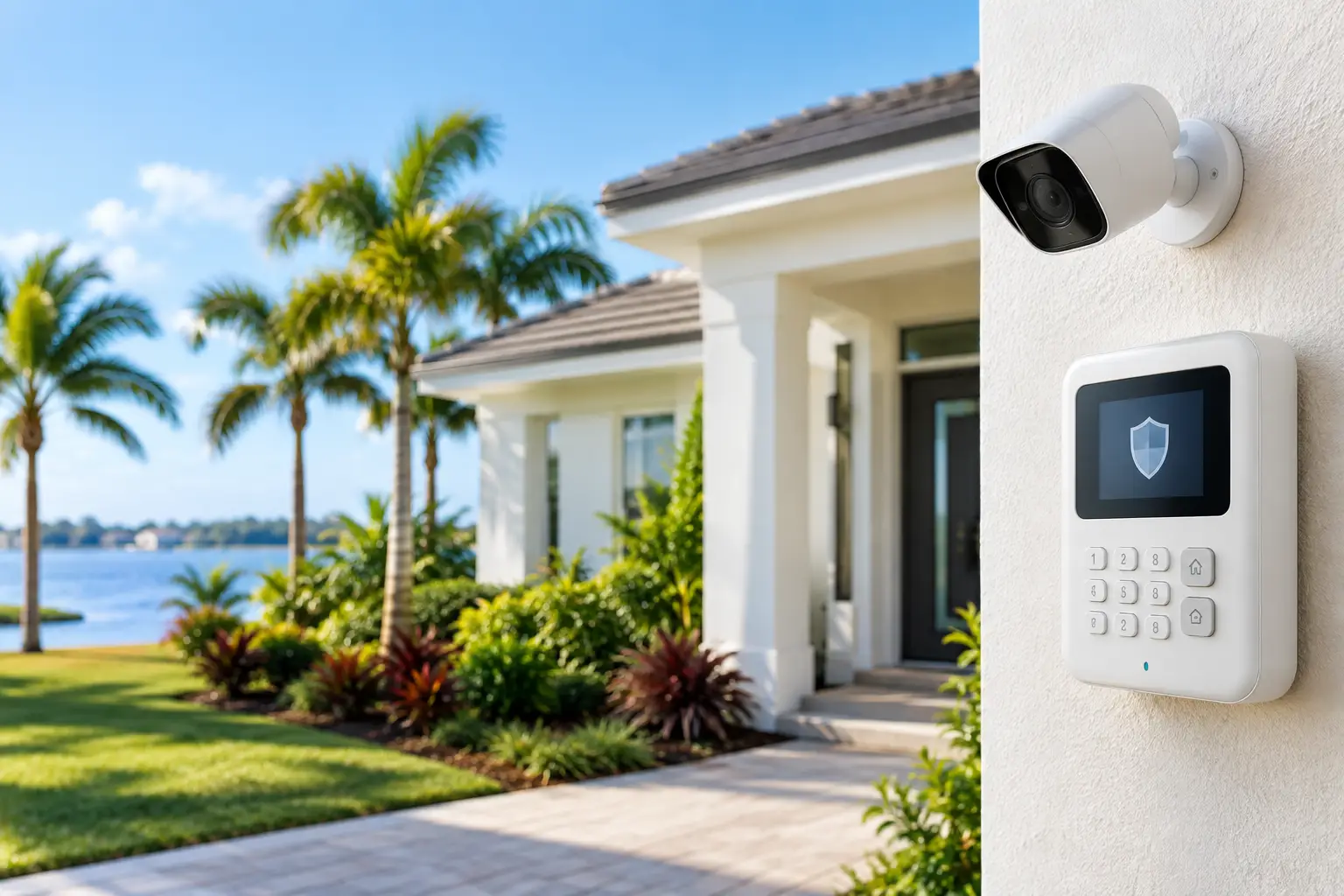
A home can look perfectly fine from the street while a small security problem quietly gets worse inside: a dead backup battery, a communicator that no longer reaches the monitoring center, a door contact that has been bypassed for years, or a camera that only records when the WiFi happens to cooperate. Alarm systems are most valuable when they work without requiring daily attention – especially for seasonal residents, second-home owners, and vacation-rental owners who may be hundreds of miles away when something happens.
The right system is not necessarily the newest or the most expensive one. It is the one that covers the property’s real risks, is easy for the household to use, and has a local team available when it needs service. For Southwest Florida homeowners, that also means planning for power interruptions, storms, humidity, vendor access, and the practical need to check on a property remotely.
What Good Alarm Systems Actually Do
An alarm system should do more than make noise when a door opens. At its core, it detects unauthorized entry, fire, smoke, carbon monoxide, water issues, or other events and sends the appropriate alert. With professional central-station monitoring, a trained operator can respond to an alarm signal when no one is available to answer a call or check an app notification.
That distinction matters. App alerts are useful, but they depend on someone seeing the message, recognizing its importance, and taking action. Monitoring adds a layer of response when a homeowner is traveling, asleep, on a plane, or simply unable to reach the phone. It can also provide documentation many insurers require for qualifying home-security discounts.
Modern systems can bring security and property management together. From a single app, a homeowner may be able to arm or disarm the alarm, receive activity alerts, view cameras, manage smart locks, adjust a thermostat, or open a garage door for a trusted service provider. The goal is not to fill a house with gadgets. It is to make routine oversight simpler without creating a complicated system that no one wants to use.
Start With the Property, Not a Sales Package
National alarm companies often sell a predefined package first and sort out the details later. That approach can leave homeowners paying for equipment they do not need while missing areas that deserve more attention.
A proper security plan starts with the home itself. A technician should consider entry doors, sliding glass doors, accessible windows, attached garages, pool access, detached structures, pet movement, existing wiring, internet reliability, and whether the home is occupied year-round. A waterfront estate, downtown condo, and vacation rental have different priorities even if they have similar square footage.
For example, a full-time resident may prioritize simple arming, perimeter protection, and smoke detection. A homeowner who spends summers out of state may need dependable remote control, camera views of key areas, and alerts for power loss or water concerns. A rental owner may need to give cleaners and maintenance vendors controlled access without sharing a permanent garage code or house key.
Security should also be practical. Motion sensors can be placed to avoid pets. Glass-break sensors may make more sense than adding contacts to every window in certain rooms. Hardwired contacts are often worth preserving when they are already installed and working well. Wireless devices are useful for additions, difficult-to-wire areas, and homes where opening walls is not desirable.
Keep What Works, Replace What Does Not
An aging panel does not automatically mean a homeowner needs a complete replacement. Many homes in Naples, Marco Island, Bonita Springs, and Fort Myers have existing alarm equipment from ADT, Vivint, or another prior provider. In many cases, compatible door contacts, motion detectors, sirens, keypads, and wiring can be evaluated and reused.
Reusing functional equipment can lower the cost of an upgrade and reduce unnecessary disruption. It also respects the investment already built into the home. Still, there are limits. Devices with recurring failures, obsolete communication methods, damaged wiring, or unsupported control panels may need replacement for the system to be dependable.
The communicator deserves particular attention. Older systems may rely on a legacy phone line, outdated cellular technology, or an internet connection that is no longer reliable. A current cellular communicator can keep the system connected even when a cable or fiber service outage affects the home internet. During storm season, backup batteries and communication paths should be tested rather than assumed to be ready.
Established platforms such as 2GIG, Honeywell, DSC, and Qolsys each have their place. The right choice depends on the home’s existing equipment, the desired app experience, automation needs, and the level of future expansion expected. A candid recommendation should explain those trade-offs clearly instead of steering every customer toward one system because it pays the highest commission.
Monitoring Is About Response, Not Just a Monthly Bill
Homeowners often compare alarm monitoring by price alone. Price matters, but it is only one part of the decision. Ask what communication method is included, whether cellular service is part of the rate, what happens if a signal is received, how false alarms are handled, and whether a local company will service the equipment after installation.
Professional monitoring does not prevent every break-in or emergency. No honest security provider should promise that. What it does provide is a defined response process when the system detects an alarm event. For homes that sit vacant for months, that process can be far more valuable than a notification that goes unnoticed overnight.
It is also wise to verify alarm permits and local false-alarm requirements with the applicable jurisdiction. Good system design and proper user training reduce accidental alarms. Homeowners should know how to cancel a false alarm, update emergency contacts, and notify the monitoring center before a contractor or houseguest will be using the property.
Cameras, Locks, and Alarms Have Different Jobs
Security cameras are valuable, but they do not replace an alarm system. Cameras help a homeowner see what happened, verify an event, monitor deliveries, and keep an eye on exterior access points. An alarm system detects a protected opening or condition and can send a monitored signal quickly. Used together, they provide better awareness than either tool alone.
Camera placement should focus on useful views, not just visible hardware. Entry doors, driveways, garages, side gates, pool areas, docks, and service entrances are common priorities. A camera aimed into direct Florida sun may need a different location than one under a covered entry. Night performance, recording retention, WiFi coverage, and privacy all matter more than the number of cameras installed.
Smart locks and garage-door controls can solve a different problem: managed access. They can let a homeowner create a temporary code for a dog walker, cleaner, property manager, or repair technician, then remove it when the work is finished. When connected thoughtfully, these tools can support a clear routine: disarm for the vendor, allow access, receive camera confirmation, and rearm once the visit is over.
That convenience should be balanced with security. Use unique codes, avoid sharing a single code among multiple people, and remove old users promptly. Remote access is only as safe as the account settings behind it, so strong passwords and two-factor authentication are worth the extra minute.
Service Matters After Installation
The best installation can still need attention after a lightning event, a battery failure, a renovation, a new internet provider, or a change in how the home is used. This is where a local company has a real advantage. The technician who evaluates the home can understand the system design, explain the work in plain language, and remain accountable when service is needed later.
Vigilant Security takes a technician-led approach because homeowners deserve recommendations based on the property, not a sales quota. That includes repairing compatible systems, taking over monitoring where appropriate, and upgrading only the parts that no longer serve the homeowner well.
Before choosing a provider, ask who will perform the estimate, whether the same company handles future service, what equipment can be reused, and what monitoring includes. Straight answers early on prevent expensive surprises later.
A dependable alarm system should make it easier to leave town, hand off access, and sleep at night without wondering whether the house is truly protected. If your current system is aging, unreliable, or tied to a provider that will not return a call, a technician-led evaluation can give you a clear path forward without replacing more than necessary.
Leave a Reply