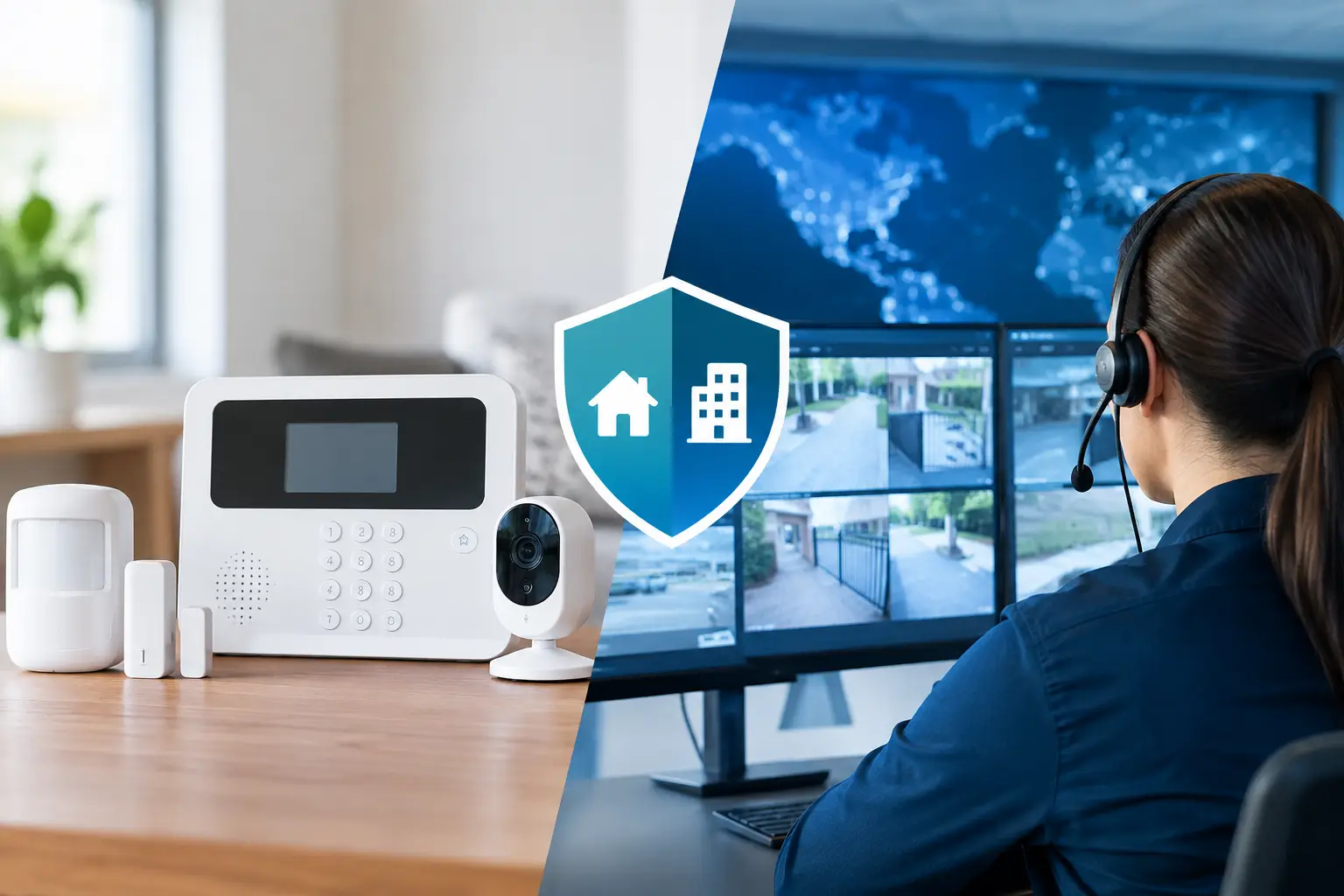
A security system is only as reassuring as the person who answers when something goes wrong. A keypad can fail before you leave town, a camera can stop recording after a storm, or a new housekeeper may need temporary access while you are hundreds of miles away. When comparing local versus national alarm providers, homeowners should look beyond the advertised monthly rate and ask a more practical question: who will take responsibility for the system after the sale?
For homeowners, seasonal residents, and vacation-rental owners in Southwest Florida, that question affects everyday convenience as much as security. The right provider can keep a working system useful, provide reliable monitoring, and send someone who understands the property when service is needed. The wrong provider can turn a simple repair into a long call-center process, a surprise bill, or an unnecessary equipment replacement.
Local Versus National Alarm Providers: What Actually Changes?
National alarm companies can be a reasonable fit for some customers. They often have widespread name recognition, heavily promoted introductory offers, and standardized packages. A homeowner who wants a basic new system installed quickly may find that appealing.
But a standard package is not the same thing as a tailored security plan. Many homes in Naples, Marco Island, Bonita Springs, and Fort Myers already have alarm panels, hardwired sensors, cameras, network equipment, gates, or smart-home devices in place. The real need may be a repair, a monitoring change, better camera coverage, or a practical upgrade that works with what is already there.
A local provider generally has more room to evaluate the actual property rather than force it into a preset bundle. That matters when a home has multiple entry points, detached structures, seasonal occupancy, or a mix of older and newer technology. It also matters when the owner wants answers from the person who inspected the home, not a sales desk reading from a script.
The sales process sets the tone
With a national provider, the first conversation may be handled by a commissioned salesperson or an outsourced call center. That does not automatically mean poor service, but it can create pressure to add equipment, accept a long contract, or replace components that still work.
A technician-led estimate changes the conversation. Instead of beginning with a package, it begins with the condition of the existing system, the layout of the home, and how the owner uses the property. A full-time resident may prioritize simple arming and dependable life-safety devices. A second-home owner may care more about remote camera viewing, water-leak alerts, smart locks, and the ability to let a vendor in without sharing a physical key.
Good recommendations should explain both the benefits and the limits. For example, wireless sensors can be an efficient solution for an addition or a difficult-to-wire area, while existing hardwired contacts may still be the better long-term choice where they are functioning properly.
Service Speed Matters More When You Are Away
A security problem does not wait for a convenient time. In Southwest Florida, a power event, internet issue, lightning strike, or storm-related outage can expose weak points in a system. If the property is vacant, a failed camera or alarm communicator may go unnoticed until the next visit.
Large providers typically schedule through centralized systems. Depending on demand, the technician who arrives may not have installed the system, may have limited history with it, and may be assigned only enough time to address a narrow service ticket. This model can work for straightforward issues, but it can be frustrating when a problem requires troubleshooting across an alarm panel, WiFi network, cameras, and smart devices.
A local company has a clear advantage when it can schedule service quickly and maintain continuity between installation and future repairs. The technician knows which equipment was installed, why it was selected, and how the homeowner prefers to use it. That personal accountability is difficult to reproduce through a national dispatch queue.
For remote owners, responsive service is not a luxury. It may be the difference between confirming that a home is protected and spending days wondering whether a notification reflects a real issue, a network outage, or a device that needs attention.
Equipment Ownership and Reuse Deserve a Close Look
One of the biggest differences between providers is not visible in the initial proposal: what happens to the equipment over time?
Some national offers are built around proprietary hardware, restrictive service arrangements, or promotional pricing that changes after an introductory period. Before signing, ask whether you own the equipment, whether it can be monitored by another company later, and whether there are cancellation or early-termination charges. Those answers are especially relevant for homeowners who may sell, renovate, or change how they use the property.
A local alarm company should be willing to inspect compatible existing equipment before recommending replacement. Panels and devices from established brands such as 2GIG, Honeywell, DSC, and Qolsys can often be repaired, upgraded, or moved to new monitoring. The same practical approach applies to cameras. Sometimes a camera system needs better network coverage, a recorder adjustment, or replacement of only a few aging cameras – not a complete tear-out.
Reuse is not always the right answer. Equipment that is unsupported, unreliable, damaged, or incapable of modern communication may need replacement. The key is receiving a clear reason, not a vague claim that every existing component is obsolete.
Monitoring Is a Service, Not Just a Monthly Charge
Professional central-station monitoring provides a response path when an alarm is triggered and the homeowner cannot respond. It can also support insurance documentation, depending on the policy and the type of monitored protection installed. But monitoring is only valuable when the system can reliably communicate.
Ask how the alarm sends signals, what happens during an internet outage, whether cellular backup is available, and who helps if the panel reports a communication trouble. Also ask whether the provider can take over monitoring for a compatible system installed by another company, including systems previously monitored through a national brand.
The lowest advertised monitoring rate is not necessarily the lowest total cost. Activation fees, service-call charges, contract terms, equipment financing, and required upgrades can change the picture. A fair provider explains recurring charges and one-time costs before work begins. Homeowners should know what they are paying for and what support is included when the system needs attention.
Cameras, WiFi, and Access Control Need One Plan
Alarm systems no longer operate alone. A camera may depend on a stable WiFi connection. A smart lock may be essential for a cleaner, pool technician, or emergency vendor. A garage-door controller can confirm whether the house was secured after a guest left. If these pieces are installed without considering the entire property, the result can be a collection of apps that work inconsistently.
National providers may offer smart-home add-ons, but their installed options are often limited to a preferred ecosystem. A local low-voltage specialist can evaluate the full setup: camera placement, WiFi access points, remote viewing, TV and speaker locations, smart locks, and access needs. The goal is not to turn every device into an automation project. It is to make the home easier to oversee from wherever you are.
For a vacation rental, that may mean separate access codes for guests and vendors, exterior cameras positioned with privacy in mind, and alerts that help verify activity without creating constant false alarms. For a seasonal residence, it may mean dependable remote arming, leak detection, and camera views of key entrances and equipment areas.
Questions Worth Asking Before You Sign
The provider’s answer to a few direct questions can reveal more than a glossy advertisement. Ask who will perform the site assessment, whether that person is commissioned, and whether the same company will service the system later. Ask whether working equipment can be reused and whether you will own the equipment after installation.
Also ask for the complete cost over the expected term, including monitoring, cellular communication, service calls, permits if applicable, and cancellation terms. If cameras or smart devices are part of the project, ask who will address the network side of the installation. A security system that is difficult to service is rarely a good value, even if its starting price looked attractive.
Choosing the Provider That Fits Your Property
The best choice depends on the home and the owner’s expectations. A national company may be adequate for a simple, standardized installation with minimal service needs. A local company is often the stronger choice when the property has existing equipment worth preserving, requires thoughtful camera or access planning, or needs quick hands-on support while the owner is away.
Vigilant Security approaches alarm, camera, and home-technology work with that local responsibility in mind: inspect first, explain the options plainly, and avoid replacing useful equipment just to sell a package. Before committing to any provider, have a qualified technician look at what is already installed. A straightforward assessment can protect both your home and your budget long after the initial installation is complete.
Leave a Reply