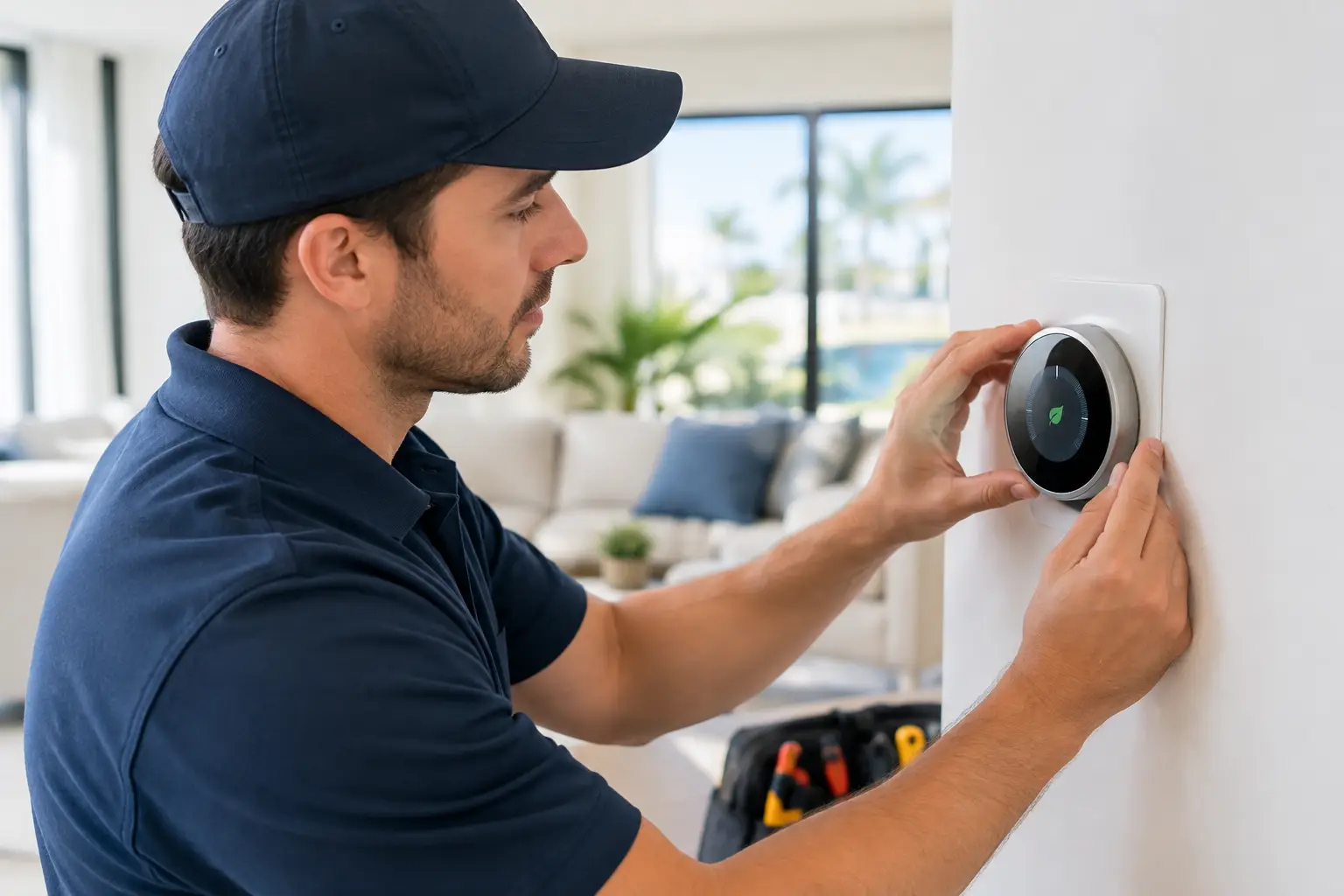
A Naples home can feel fine at breakfast and become uncomfortably warm by midafternoon, especially when humidity is working against the air conditioner. Smart thermostat installation Naples homeowners choose should do more than put a temperature control on an app. It should work correctly with the home’s HVAC equipment, give owners useful control while they are away, and avoid creating another device that needs constant attention.
For a primary residence, a seasonal property, or a vacation rental, the right thermostat can make cooling management easier. The wrong one can cause short cycling, WiFi frustrations, inaccurate temperature readings, or compatibility problems with a heat pump or multi-stage system. That is why the installation matters as much as the thermostat itself.
What a Smart Thermostat Should Solve in Naples
Southwest Florida cooling is not just about lowering the temperature. Your system also has to manage moisture, long run times, intense sun exposure, and homes that may sit empty for weeks or months. A good smart thermostat gives you visibility into what is happening at the property without forcing you to guess from hundreds of miles away.
Remote control is the obvious benefit. You can adjust the temperature before arriving in Naples, reduce unnecessary cooling when a property is vacant, or make a change after a guest checks out. But remote alerts may be even more valuable. A high-temperature notification can tell you something is wrong before a hot, humid house creates a larger problem for finishes, furnishings, electronics, or stored belongings.
For seasonal residents, a thermostat can also support a practical vacant-home setting. The goal is not always to shut the air conditioning off. In this climate, maintaining a reasonable temperature and humidity level can be the smarter approach. The best setting depends on the home, its equipment, how often it is checked, and whether it contains sensitive materials or electronics.
Smart Thermostat Installation in Naples Starts With Compatibility
Not every smart thermostat belongs on every HVAC system. Many online buyers discover that after the box is open and the old thermostat is already off the wall. A professional should identify the system type before recommending a model.
Most homes use a conventional air conditioner, heat pump, or multi-stage system, but the wiring and control requirements can vary. Some homes have a common wire, often called a C-wire, that provides steady power to the thermostat. Others do not. Some systems need an adapter or additional wiring. In certain cases, adding the wrong device or using an improvised power solution can lead to unreliable operation.
A technician should also check whether the home has separate zones, a whole-home dehumidifier, a fresh-air control, or other equipment tied into the HVAC controls. These details affect which thermostat features will actually work. A thermostat with a long feature list is not necessarily a better fit if those features cannot communicate properly with the system you own.
Older homes deserve extra attention. Existing thermostat wire may be usable, or it may be brittle, undersized, incomplete, or routed in a way that complicates an upgrade. A candid installer will explain the options rather than selling a thermostat first and revealing wiring charges later.
The Wall Location Matters More Than Most People Think
A smart thermostat cannot make accurate decisions from a bad location. If it is mounted near a sunny exterior wall, kitchen heat, a supply vent, or an exterior door that opens frequently, it may read the room incorrectly. That can leave other parts of the home too warm or cause the system to run longer than necessary.
Sometimes the best solution is to retain the existing location. Other times, relocating the thermostat or using an approved remote sensor makes more sense. Larger homes with different comfort needs upstairs and downstairs may benefit from sensors, but they are not a substitute for proper zoning when the HVAC design itself is the issue.
Remote Access Is Especially Useful for Second Homes
Naples property owners often need to manage more than comfort. They need to know a property is being maintained when they are out of state. A properly configured thermostat app can show the current indoor temperature, permit schedule changes, and send alerts when the temperature rises outside a chosen range.
That is useful after a power interruption, during an HVAC service visit, or when a trusted vendor needs temporary access to the home. It can also work well alongside smart locks, garage-door controls, cameras, and a monitored alarm system. Instead of giving a vendor a physical key and hoping it is returned, owners can manage access and verify activity more directly.
For vacation rentals, thermostat controls require balance. Guests need a comfortable home, while owners need protection against settings that strain the equipment or drive up utility costs. Some thermostat platforms allow temperature limits or schedules. The exact approach should fit the rental’s rules, property manager workflow, and HVAC capacity. Overly restrictive settings can create guest complaints, while no guardrails can invite wasteful use.
What Professional Installation Should Include
Installing a thermostat is sometimes straightforward, but it should never be treated as a guess-and-go project. The installer should first confirm the HVAC system type and existing wiring, then verify that the chosen device is appropriate for the equipment.
After installation, the system should be tested in each relevant mode. That includes cooling, heating when applicable, fan operation, and any accessories such as dehumidification controls. The thermostat should connect to the homeowner’s WiFi network, the mobile app should be set up with the correct account owner, and remote access should be tested before the technician leaves.
This final setup step is where many do-it-yourself installations fall short. A thermostat may appear to work locally but lose its connection later because it was placed on the wrong WiFi band, given an incomplete account setup, or connected through credentials the homeowner does not control. For second-home owners, it is wise to use an account and recovery email they can access year-round.
Vigilant Security can integrate smart thermostat controls into a broader home-technology plan, helping homeowners keep remote access practical rather than piling up disconnected apps and equipment. The focus should be on the functions you will actually use, not on selling features that look impressive in a showroom.
When a Smart Thermostat Is Not the Whole Answer
A thermostat can improve control, but it cannot repair an undersized air conditioner, blocked drain line, failing compressor, leaking ductwork, or unevenly designed system. If one room is consistently hot, the solution may involve insulation, duct balancing, equipment service, or additional zoning rather than a new wall control.
Likewise, energy savings depend on how the home is used. A smart schedule can reduce waste in an empty home, but aggressive temperature setbacks may not be ideal for every Naples property. Bringing a hot, humid house back to a comfortable setting can take time and may not produce the savings an advertisement suggests. Home construction, system efficiency, occupancy, and humidity goals all matter.
The best reason to install a smart thermostat is not a promise of dramatic savings. It is better awareness and better control. You can see the setting, receive useful alerts, and make changes without being at the property.
Questions Naples Homeowners Commonly Ask
Can I use my existing thermostat wiring?
Often, yes. Many existing installations can support a smart thermostat, but the answer depends on the number of wires, their condition, and your HVAC equipment. A compatibility check prevents surprises.
Will a smart thermostat work if my WiFi goes down?
Most models still allow local temperature adjustment at the thermostat itself. Remote app control, alerts, and cloud-based schedules may be unavailable until the internet connection returns. For an unoccupied property, reliable WiFi and a properly placed access point are part of the overall setup.
Can I control a smart thermostat from outside Florida?
Yes, as long as the thermostat, home network, and app account are working properly. This is one of the strongest benefits for seasonal residents and owners who travel frequently.
Should I replace a working programmable thermostat?
It depends on your needs. If you are home year-round, have a simple schedule, and do not need remote alerts, a working programmable thermostat may be enough. If you want visibility while away, easier scheduling, or integration with other home controls, an upgrade can be worthwhile.
A smart thermostat should leave you with fewer unknowns when you are away from your Naples home. Choose equipment that fits the HVAC system, make sure the account and alerts are configured correctly, and keep the setup simple enough that you will actually use it when it matters.
Leave a Reply