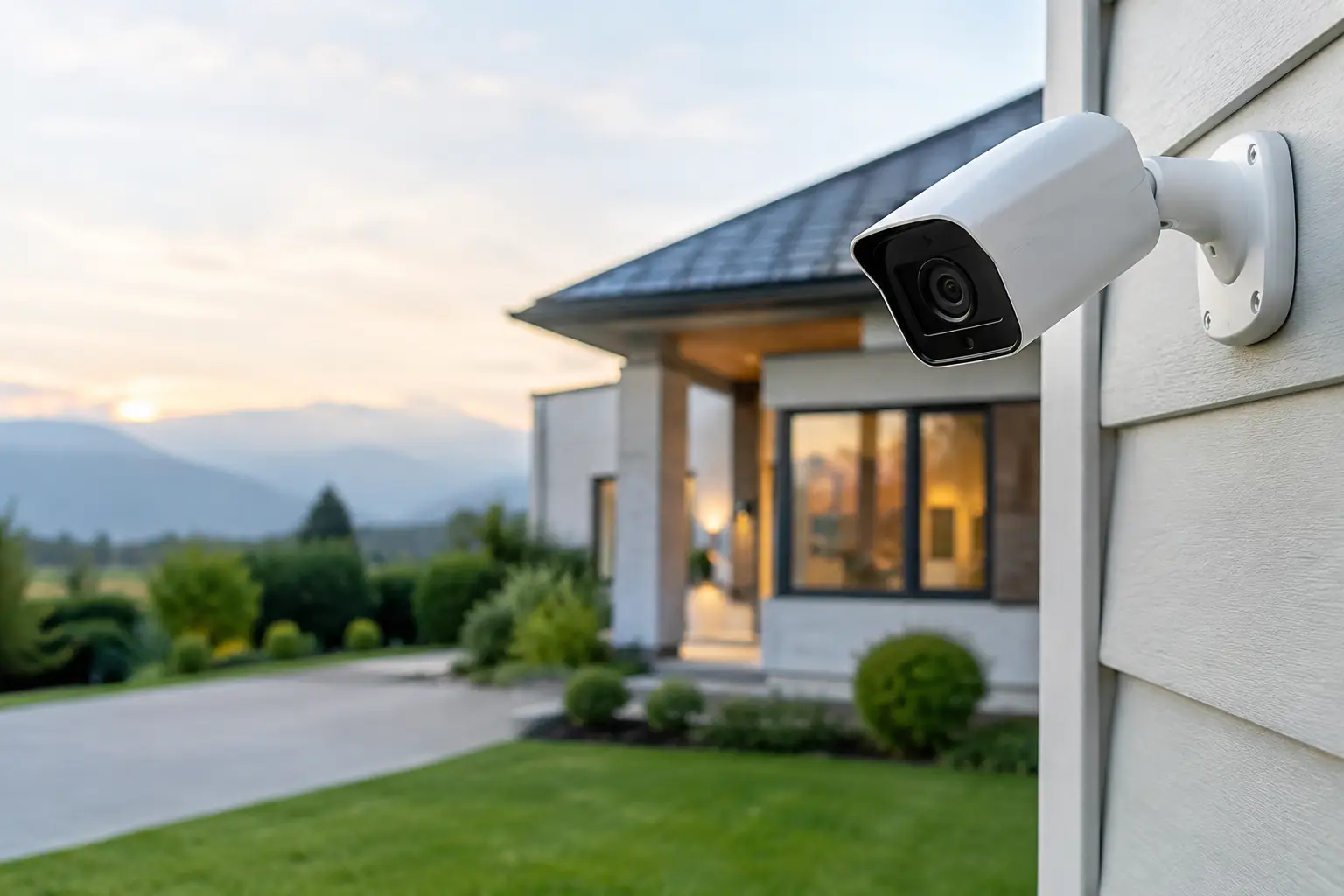
A vacant home can look perfectly normal from the street while a side gate is left open, a delivery sits at the front door for days, or a pool-service vendor arrives at the wrong time. Security cameras give homeowners the ability to see what is happening at the property instead of relying on guesswork, neighbor calls, or an alert that provides no context.
For homeowners, seasonal residents, and vacation-rental owners in Southwest Florida, the right camera system is less about collecting footage and more about answering practical questions quickly. Did the landscaper arrive? Was that motion near the garage a person, an animal, or rain blowing through? Is the home secure after a storm? Good camera coverage turns those questions into something you can check from your phone.
Start With the Areas That Matter Most
A camera system should follow how someone could approach, enter, or move around your home. The front door gets most of the attention, but it is not always the most useful viewing angle. A clear, wide view of the driveway can show vehicles, visitors, package deliveries, and activity around the garage. Cameras covering side yards, rear patios, pool areas, dock access, and gates often matter just as much.
The goal is not to put a camera on every wall. It is to eliminate the blind spots that create uncertainty. A homeowner who is away for months may want confirmation that service vendors are entering only the areas they should. A vacation-rental owner may need visibility at exterior doors and shared access points without pointing cameras toward private guest areas. A year-round resident may care most about package theft, driveway activity, and who is ringing the doorbell.
Camera placement should also account for Florida weather. Bright afternoon sun, heavy rain, salt air near the coast, landscaping growth, and insects around exterior lights can all affect a camera’s view and motion alerts. A system that looked fine on installation day may become less useful when a palm frond grows into the frame or a setting sun turns a driveway into a glare-filled image.
Think Beyond the Front Door
Doorbell cameras can be useful, especially for communicating with visitors or watching packages. They are not a replacement for a properly planned exterior system. A doorbell camera usually sees the person standing at the door, but it may not capture someone approaching from the driveway, opening a vehicle, or moving toward a side entrance.
A well-designed system commonly uses a doorbell camera for interaction and dedicated exterior cameras for broader coverage. That combination gives you both a close view at the door and useful context before someone reaches it.
Wired Security Cameras Usually Make More Sense for Long-Term Protection
Wireless cameras are convenient for a small project or a location where running cable is not practical. They can work well for a single doorbell, a detached area, or a temporary need. But convenience comes with trade-offs: batteries need attention, WiFi coverage can vary, and cloud subscriptions can add ongoing cost.
For a primary residence, second home, or larger property, wired security cameras are often the better long-term choice. Cameras connected by network cable can receive dependable power and data through one line. They do not depend on changing batteries, and they typically provide more consistent video quality than cameras trying to hold a wireless signal through concrete block walls, metal roofing, or several rooms of a home.
Wired systems also make it easier to record continuously to a local recorder. That matters when you need to review more than a short motion clip. If a vehicle appears in the neighborhood at 2:00 a.m., continuous footage can show where it came from, where it went, and whether it stopped at other homes. Motion-only recordings may miss that larger story.
That does not mean every camera must be hardwired. The right answer depends on the construction of the home, the distance to the camera location, available attic access, WiFi strength, and what you need the system to do. A technician-led estimate should explain those options plainly instead of pushing the highest-priced equipment.
Video Quality Matters, but Placement Matters More
Homeowners often start by asking for the highest resolution available. Better resolution can help, particularly for identifying faces, license plates, or details farther from the camera. But a high-resolution camera mounted too high or aimed across an overly wide area will still produce disappointing results.
For identification, the camera needs to be close enough and aimed at the right angle. A camera placed above a garage may give an excellent overview of the driveway but may not read a license plate at night. A camera focused tightly on the entrance may capture a clear face but miss the vehicle that dropped someone off. These are different jobs, and one camera may not do both well.
Night performance deserves the same attention. Infrared night vision can provide a usable black-and-white image in darkness, while cameras with built-in lighting may provide color video when activated. The best option depends on nearby street lighting, reflective surfaces, neighbors, and whether visible lighting would be useful or unwanted.
Ask to see realistic expectations for daytime and nighttime views. Camera marketing images are often taken in ideal conditions. Your driveway, landscaping, and exterior lighting are what determine the footage you will actually receive.
Recording and Alerts Should Work Together
A camera system needs a clear recording plan. Cloud recording can be simple to use and can keep clips available even if equipment inside the home is damaged or removed. The downside is recurring subscription fees, reliance on internet service, and limits on how much video is retained.
Local recording to a network video recorder gives you control over storage and supports continuous recording without a monthly fee for every camera. It is particularly useful for larger systems and homes that sit empty for long periods. However, local recording should be installed properly, protected by backup power when appropriate, and paired with secure remote access.
Many homeowners benefit from a hybrid approach: local recording for full-time video and cloud access or notifications for important events. The decision should be based on how often you review footage, how long you need to keep it, and how critical the property is when you are away.
Alerts also need restraint. A camera that sends fifty alerts a day quickly gets ignored. Proper motion settings can focus notifications on people, vehicles, or activity in specific zones while reducing alerts from passing traffic, rain, pool movement, or trees. The best alert is not the most frequent one. It is the one that tells you something worth checking.
Remote Access Needs to Be Secure and Simple
Remote viewing is a major reason homeowners install cameras, especially those who split time between Florida and another state. You should be able to open an app, view live video, review a recorded event, and share access with a spouse or trusted property manager without making the system difficult to use.
That convenience should not come at the expense of security. Use unique passwords, turn on two-factor authentication when available, and avoid sharing a single login with every vendor who needs access. If a property manager, house sitter, or family member no longer needs access, remove it promptly.
Reliable remote viewing also starts with the home network. Weak WiFi near exterior cameras, an outdated router, or poor internet service can make even good equipment feel unreliable. In some homes, adding properly placed WiFi access points is as important as selecting the cameras themselves.
Keep Cameras Separate From Alarm Monitoring
Cameras help you verify what is happening. A monitored alarm system is designed to create an emergency response path when a protected door, window, motion detector, smoke detector, or panic device is triggered. They work well together, but they do different jobs.
If an alarm goes off while you are traveling, camera access can help you see whether there is visible activity around the property. If a camera alert shows someone near a side door, an armed alarm system provides another layer of protection if entry is attempted. For many second homes, that combination brings far more peace of mind than cameras alone.
It is also worth reviewing what equipment you already own before replacing everything. Functional existing wiring, cameras, alarm panels, and compatible devices may be reusable. Reusing what still works can reduce cost and avoid the unnecessary replacement cycle that many national providers encourage.
Choose Service You Can Reach When Something Changes
A camera system is not a one-time purchase. Settings need adjustment, trees grow into viewing areas, internet providers replace equipment, and homeowners change how they use a property. When a camera stops recording or remote access disappears, the quality of local service matters more than the logo on the box.
For homes in Naples, Marco Island, Bonita Springs, and Fort Myers, working with a local technician who understands the property, the equipment, and the reason the system was installed can save a lot of frustration. Vigilant Security takes that practical approach: recommend what fits the home, preserve usable equipment where possible, and make sure the system remains understandable after installation.
The best camera system is the one you will actually check, trust, and maintain. Start with the entrances and exterior areas that create the most risk, choose recording that fits your time away from the home, and insist on a clear explanation of what each camera can and cannot see.
Leave a Reply