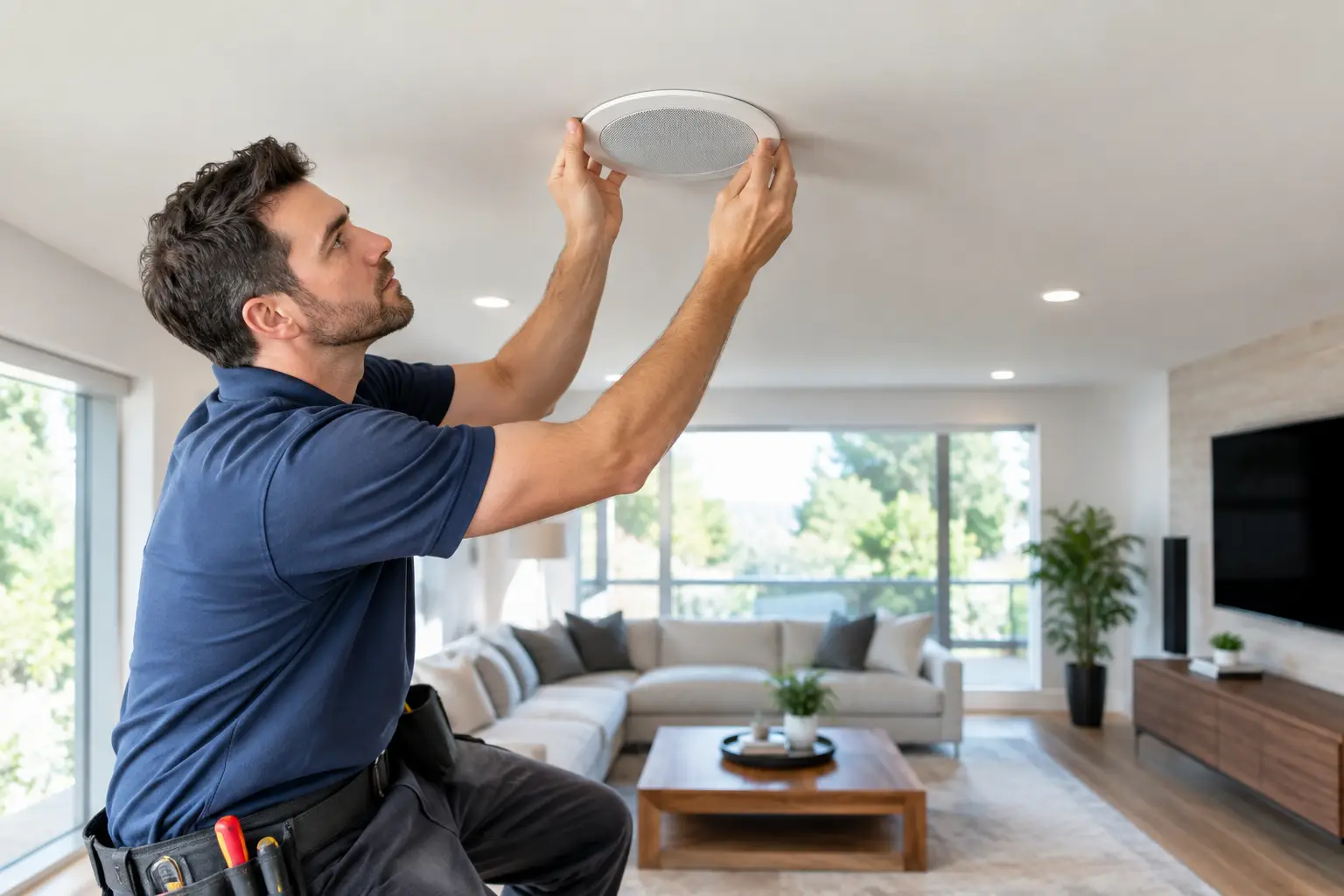
A whole house speaker installation should make your home more enjoyable, not leave you juggling apps, remotes, and speakers that never seem to play in the right room. The best systems disappear into the home visually while giving you clear, dependable sound where you actually spend time: the kitchen, lanai, great room, primary suite, office, and outdoor entertaining areas.
For homeowners in Naples, Marco Island, and throughout Southwest Florida, the design matters as much as the equipment. A system that sounds good in a sealed media room may not perform the same way in an open-concept home with tile floors, tall ceilings, and a lanai exposed to humidity and wind. The right installation starts with how you use the property, whether you live there year-round, visit seasonally, or manage it as a vacation rental.
Start With Rooms and Routines, Not Speaker Counts
It is easy to begin with a request for speakers in every room. That is not always the smartest use of your budget. Bedrooms may need quiet, personal listening. The kitchen and living area may work better as one shared zone. The lanai may deserve its own zone so music outside does not interrupt a movie indoors.
A good design identifies listening zones first. Each zone can play the same music or something different, depending on the system and controls selected. For example, you might play a game on the television in the great room while someone listens to a playlist on the lanai and another family member uses a podcast in the office.
The number of zones affects the wiring, amplifiers, control options, and cost. More zones create more flexibility, but they also add equipment and setup complexity. There is no prize for installing audio in rooms that will rarely be used. A technician-led estimate should help you decide where sound adds value and where it does not.
Wired, Wireless, or a Combination?
A wired speaker system remains the strongest choice when clean appearance, sound quality, and long-term reliability matter. In-ceiling and in-wall speakers can be placed precisely, with speaker wire routed back to a central equipment location. The result is a clean room with no cords, no countertop speakers, and no need to keep replacing batteries or moving devices around.
Wireless speakers have a place, especially in existing homes where opening walls is not practical or where a homeowner wants to add a single room later. They can be convenient, but wireless systems depend heavily on WiFi coverage and may create control issues if the network is weak or crowded. A large home with concrete block construction, outdoor areas, and multiple smart devices often needs properly placed WiFi access points before wireless audio will be dependable.
For many homes, a hybrid setup makes sense. Wired ceiling speakers can handle the main living spaces and lanai, while a wireless option can serve a secondary room without a major renovation. The right answer depends on the home, access above the ceiling, existing wiring, and how much flexibility you need.
Existing Wiring Can Save Money
Older homes sometimes already have speaker wire, volume controls, structured wiring panels, or equipment left behind by a previous owner. That does not automatically mean every component should stay, but it also does not mean it should all be ripped out.
Before recommending replacement, an experienced low-voltage technician should test what is there. Functional wire runs and properly installed speakers can often be reused, reducing labor and material costs. If old equipment is unreliable, unsupported, or poorly located, it may make more sense to replace only the problem components rather than rebuilding the entire system.
That practical approach is especially valuable for homeowners buying an established property in Southwest Florida. You should know what works, what does not, and what it will cost to improve it before someone sells you a full replacement.
Speaker Placement Is What Makes a System Sound Natural
Ceiling speakers are popular because they keep the room uncluttered, but placement cannot be an afterthought. A pair of speakers centered over a seating area generally delivers a more satisfying result than several speakers scattered across a large ceiling. In a kitchen, placement should account for where people stand, prepare food, and gather. In a bedroom, speakers should not be directly above the pillow if the goal is comfortable low-level listening.
Open floor plans need special attention. Sound travels easily across hard tile, glass, and high ceilings, and too many speakers can make music loud without making it clear. Proper spacing, suitable speaker size, and reasonable amplifier power matter more than simply adding volume.
Outdoor audio requires a different plan. Lanai speakers need to be rated for the environment and placed to cover seating areas without blasting neighbors. Pool areas, docks, patios, and outdoor kitchens may require weather-resistant speakers, protected wiring, and equipment installed away from moisture. Southwest Florida heat, humidity, rain, and salt air near the coast are not details to ignore.
Controls Should Be Easy for Everyone Who Uses the House
The most expensive audio system is frustrating if guests, family members, or property managers cannot use it. Simple control should be part of the installation plan from the beginning.
Many homeowners prefer app-based control from a phone or tablet. Others want a physical wall keypad in the kitchen or by the lanai door for quick volume changes and source selection. A television remote may also control sound in a media room. These options can work together, but they need to be configured properly so the system behaves predictably.
For a second home or rental property, simple controls are even more valuable. Owners may want to limit what guests can adjust while still allowing easy music playback in common areas. If trusted vendors need access for cleaning, maintenance, or pool service, audio control can be considered alongside smart locks, cameras, and remote property management tools.
A home technology system does not need to be overly complicated to be useful. It needs to be understandable on a busy Saturday night and manageable when you are several states away.
Plan Equipment Locations Before Walls Are Closed
Amplifiers, streaming devices, network gear, and control equipment need a home. A closet, utility room, structured wiring panel, or dedicated equipment rack can work well if it has power, ventilation, and access for future service. Stuffing audio components into an unventilated cabinet may look tidy at first, but heat can shorten equipment life and make troubleshooting harder.
New construction and renovations offer the best access for wiring. Speaker wires, network cable, and conduit can be installed before drywall goes up, preserving more options at a lower labor cost. In an existing home, a careful installer can often use attic access, closets, soffits, and other routes to minimize wall cuts. The amount of access available is one of the main factors that determines installation time and price.
Ask how the equipment will be labeled and documented. If a future service call is needed, clear zone labels and organized wiring save time. They also make it easier to add speakers, replace a streaming source, or integrate other low-voltage systems later.
Why Local Installation Matters After the Job Is Finished
Speaker installation is not just a one-day project. Apps update, WiFi equipment changes, televisions are replaced, and a homeowner may decide to add a room or outdoor zone later. When the person who installed the system is part of a local service team, getting help is usually much easier than calling a national retailer or trying to track down a subcontractor.
Vigilant Security approaches low-voltage projects with the same local accountability it brings to alarms, cameras, smart locks, and remote-access systems. That means discussing what fits the property, explaining trade-offs clearly, and avoiding unnecessary replacement when usable equipment can remain in service.
Before approving a whole house speaker installation, ask for a room-by-room plan, the number of independent listening zones, where equipment will be located, and how the system will be controlled. You should also understand whether your existing network can support the selected audio equipment, particularly if wireless components are part of the plan.
A well-planned system lets you put music where life happens, keep the walls and counters clear, and still have a local technician to call when the home changes around it.
Leave a Reply